Believe
The Crisis-Averting Ta Khun Hora Amulet of 2007
เหรียญตาขุนโหรกู้วิกฤต ปี 2550
จากผ้ายันต์แห่งวิกฤต สู่ตำนานวัตถุมงคลสายจตุคามรามเทพ
ในช่วงที่กระแสจตุคามรามเทพรุ่งเรืองอย่างมากในประเทศไทย มีวัตถุมงคลนับร้อยนับพันรุ่นถือกำเนิดขึ้น แต่ท่ามกลางจำนวนมหาศาลนั้น มีวัตถุมงคลอยู่กลุ่มหนึ่งที่ได้รับการกล่าวถึงแตกต่างออกไป เพราะเรื่องราวของการสร้างไม่ได้เริ่มต้นจากกระแสความนิยม หากเชื่อมโยงย้อนกลับไปถึงบุคคลสำคัญในตำนานการสร้างศาลหลักเมืองนครศรีธรรมราช และผ้ายันต์โบราณที่รู้จักกันในชื่อ “ยันต์กู้วิกฤต” วัตถุมงคลนั้นคือ “ตาขุนโหรกู้วิกฤต ปี พ.ศ. 2550”
วัตถุมงคลรุ่นนี้เคยได้รับการกล่าวถึงในนิตยสารพระเครื่องหลายฉบับ ทั้งในแง่ประวัติการจัดสร้าง มวลสาร และประสบการณ์ตามความเชื่อของผู้บูชา โดยเฉพาะเรื่องการช่วยให้ผ่านพ้นสถานการณ์ติดขัดทางการเงิน การค้า การงาน และวิกฤตชีวิต สำหรับผู้ศรัทธา สิ่งเหล่านี้ถูกเล่าขานในฐานะประสบการณ์ส่วนบุคคล ส่วนในมุมของนักสะสม ความน่าสนใจของรุ่นนี้อยู่ที่การนำสัญลักษณ์สำคัญจากยุคแรกของสายหลักเมืองนครศรีธรรมราชกลับมาสร้างใหม่อีกครั้ง
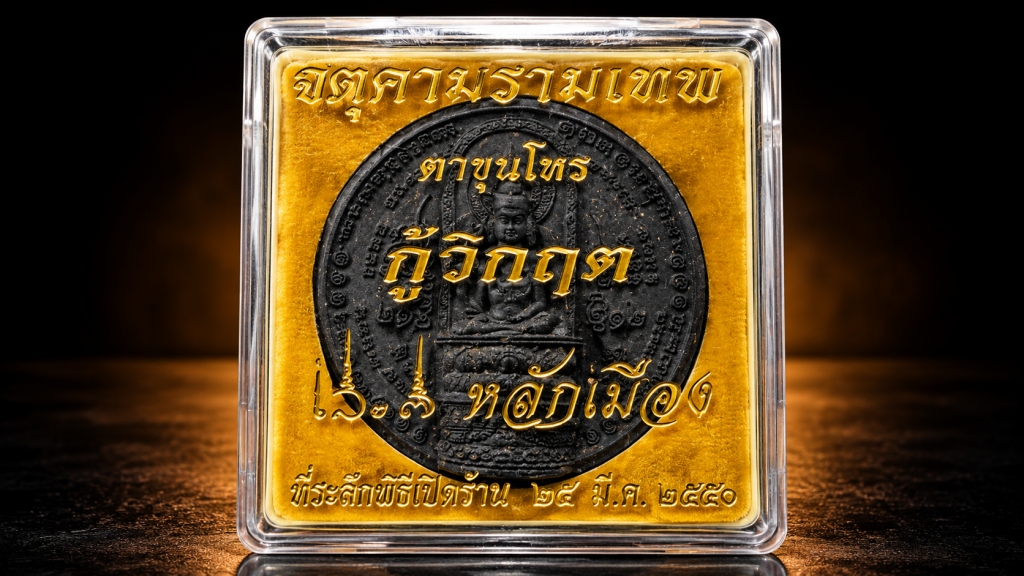
“ตาขุนโหร” คือใคร
ผู้ที่เพิ่งเริ่มศึกษาวัตถุมงคลสายจตุคามรามเทพอาจคุ้นเคยกับชื่อ “องค์จตุคามรามเทพ” มากกว่า และเกิดคำถามว่า “ตาขุนโหร” คือใคร และมีความเกี่ยวข้องอย่างไรกับองค์จตุคามรามเทพ ตามบันทึกและเรื่องเล่าที่ถ่ายทอดในกลุ่มคณะกรรมการและศิษย์ผู้เกี่ยวข้องกับการสร้างศาลหลักเมืองนครศรีธรรมราช “องค์ตาขุนโหร” ได้รับการอธิบายว่าเป็น พญาโหราเทพผู้เชี่ยวชาญด้านโหราศาสตร์ ฤกษ์ยาม และพิธีกรรม และในคติของสายนี้ยังมีการกล่าวถึงท่านในฐานะ “รามเทพ” ผู้มีความสัมพันธ์ใกล้ชิดกับองค์จตุคาม เรื่องเล่าในสายศรัทธายังกล่าวว่า ท่านเป็นอาจารย์ของพญาชิงชัยและพญาสุขุม รวมทั้งได้รับการยกย่องว่าเป็นหนึ่งในปรมาจารย์สำคัญแห่งหลักเมือง ทำหน้าที่เสมือนราชครูและที่ปรึกษาในกิจการต่าง ๆ ด้วยเหตุนี้ ภาพลักษณ์ของตาขุนโหรจึงไม่ได้ผูกอยู่กับเรื่องโชคลาภเพียงด้านเดียว แต่เกี่ยวข้องกับ ปัญญา การพยากรณ์ การกำหนดฤกษ์ การตัดสินใจ และการหาทางออกจากสถานการณ์ที่ซับซ้อน
จากพิธีสร้างหลักเมือง สู่ชื่อของ “ตาขุนโหร”
นับตั้งแต่ช่วงการดำเนินการสร้างศาลหลักเมืองนครศรีธรรมราชในปลายทศวรรษ 2520 ต่อเนื่องเข้าสู่ช่วงต้นทศวรรษ 2530 เรื่องเล่าของตาขุนโหรปรากฏอยู่ในเหตุการณ์สำคัญหลายช่วง ตามคำบอกเล่าของผู้เกี่ยวข้อง ท่านได้รับการกล่าวถึงว่าเป็นผู้มีบทบาททางจิตวิญญาณในพิธีกรรมสำคัญ ตั้งแต่การเลือกและตัดไม้ตะเคียนทอง การกำหนดรูปแบบเสาหลักเมือง การวางฤกษ์ ไปจนถึงพิธีที่เกี่ยวข้องกับดวงเมือง ในความเชื่อของศิษย์สายหลักเมือง ตาขุนโหรจึงเป็นมหาเทพผู้มีความสามารถในการหยั่งรู้เหตุการณ์ มีเมตตาต่อผู้ประสบความยากลำบาก และเป็นที่พึ่งเมื่อชีวิตเผชิญสถานการณ์ที่ดูเหมือนหาทางออกไม่ได้ คำว่า “กู้วิกฤต” ซึ่งปรากฏในวัตถุมงคลรุ่น พ.ศ. 2550 จึงไม่ได้เกิดขึ้นโดยไร้ที่มา หากมีเรื่องราวย้อนกลับไปหลายสิบปีก่อนหน้า
ตำนาน “ผ้ายันต์กู้วิกฤต”
เรื่องราวสำคัญที่สุดที่กลายมาเป็นต้นแบบของวัตถุมงคลรุ่นนี้ เกิดขึ้นในช่วงที่การก่อสร้างศาลหลักเมืองนครศรีธรรมราชยังดำเนินอยู่ ราวปี พ.ศ. 2532 ตามเรื่องเล่าที่สืบทอดกันมา ในช่วงเวลานั้นสภาพเศรษฐกิจและการค้าของผู้คนจำนวนหนึ่งไม่ดีนัก ศิษย์หลายคนประสบปัญหาด้านธุรกิจ บางรายซึ่งประกอบอาชีพเลี้ยงกุ้งต้องเผชิญภาวะขาดทุนอย่างหนักถึงขั้นสูญเสียทรัพย์สิน เมื่อเหล่าศิษย์นำความเดือดร้อนมากล่าวถึง จึงมีคำบอกเล่าว่าได้มีการจัดทำ “ผ้ายันต์กู้วิกฤต” ขึ้นชุดหนึ่ง บนผืนผ้าปรากฏอักขระและเลขยันต์จำนวนมาก พร้อมองค์ประกอบเชิงสัญลักษณ์ตามคติของสายหลักเมือง โดยผ้ายันต์ดังกล่าวถูกมอบให้เฉพาะศิษย์ใกล้ชิด และมีคำกำชับตามความเชื่อว่า เมื่อผู้ใดประสบปัญหาชีวิต เศรษฐกิจ หรือเหตุการณ์ร้ายแรง ให้อาราธนาผ้ายันต์ติดตัว เพื่อเป็นสิริมงคลและเป็นเครื่องยึดเหนี่ยวจิตใจในการผ่านพ้นอุปสรรค เมื่อเวลาผ่านไป ผ้ายันต์กู้วิกฤตในยุคดังกล่าวกลายเป็นสิ่งที่พบเห็นได้ยาก เนื่องจากมีการจัดทำจำนวนน้อย และส่วนใหญ่ตกอยู่กับศิษย์รุ่นเก่า ลวดลายของผ้ายันต์จึงกลายเป็นต้นแบบสำคัญที่ถูกนำกลับมาใช้กับ ตาขุนโหรกู้วิกฤต ปี 2550
การกลับมาของตาขุนโหร หลังเวลากว่า 2 ทศวรรษ
ความสำคัญอีกประการหนึ่งของรุ่นกู้วิกฤต พ.ศ. 2550 คือการนำรูปแบบของ “องค์ตาขุนโหร” ซึ่งเคยจัดสร้างในยุคแรกกลับมาเป็นต้นแบบอีกครั้ง กล่าวกันว่า รูปแบบองค์ตาขุนโหรดั้งเดิมเคยปรากฏมาตั้งแต่ประมาณปี พ.ศ. 2529 ดังนั้นเมื่อมีการสร้างวัตถุมงคลรุ่นกู้วิกฤตในปี พ.ศ. 2550 จึงเท่ากับเป็นการนำรูปแบบสำคัญในอดีตกลับมาสืบทอดอีกครั้งหลังเวลาผ่านไปประมาณ 20 ปี นี่เป็นหนึ่งในเหตุผลที่ทำให้ชื่อ “ตาขุนโหร” เริ่มเป็นที่รู้จักแพร่หลายมากขึ้นในหมู่นักสะสมและผู้ศรัทธาสายจตุคามรามเทพ
สองพิมพ์สำคัญของ “ตาขุนโหรกู้วิกฤต”
การจัดสร้างแบ่งออกเป็น 2 รูปแบบหลัก ได้แก่
1. พิมพ์องค์ตาขุนโหร หลังยันต์กู้วิกฤต
ด้านหน้าเป็นรูปจำลององค์ตาขุนโหร อ้างอิงรูปแบบจากองค์รุ่นแรกในยุค พ.ศ. 2529 รูปลักษณ์ยังคงบรรยากาศของงานวัตถุมงคลสายหลักเมืองยุคแรก ให้ความรู้สึกขรึม เข้มขลัง และมีเอกลักษณ์เฉพาะตัว ด้านหลังเป็นลวดลายที่จำลองจาก “ผ้ายันต์กู้วิกฤต” โดยมีสัญลักษณ์เทพราหูรายล้อมแปดทิศ พร้อมอักขระและเลขยันต์จำนวนมาก การนำผ้ายันต์ที่ครั้งหนึ่งเคยมีเฉพาะในกลุ่มศิษย์ใกล้ชิดมาเป็นต้นแบบด้านหลัง จึงถือเป็นจุดเด่นที่สุดประการหนึ่งของรุ่นนี้
2. พิมพ์ยันต์กู้วิกฤตสองด้าน
อีกพิมพ์หนึ่งใช้ลวดลายยันต์เป็นองค์ประกอบสำคัญทั้งสองด้าน มีจำนวนจัดสร้างน้อยกว่าพิมพ์องค์ตาขุนโหรอย่างชัดเจน จึงเป็นพิมพ์ที่นักสะสมให้ความสนใจเป็นพิเศษ
มวลสารเก่า — จุดสำคัญของการจัดสร้าง
นอกเหนือจากรูปแบบและเรื่องราวของยันต์กู้วิกฤต สิ่งที่ทำให้การสร้างครั้งนี้ได้รับการกล่าวถึงอย่างมากคือ มวลสาร ตามข้อมูลการจัดสร้าง มีการนำวัตถุมงคลและมวลสารเก่าจากยุคก่อนหน้ามาเป็นส่วนผสม โดยเฉพาะ พระผงสุริยัน–จันทรา รุ่นแรก ปี พ.ศ. 2530 ทั้งพิมพ์ใหญ่และพิมพ์เล็ก ถูกนำมาบดเป็นส่วนหนึ่งของหัวเชื้อมวลสาร เพื่อเชื่อมโยงวัตถุมงคลที่สร้างในปี พ.ศ. 2550 กับการจัดสร้างยุคแรกของสายจตุคามรามเทพ นอกจากนี้ยังระบุว่ามีการนำ ผงมหาว่านและมวลสารมงคลเก่ามากกว่า 1,500 ชนิด ซึ่งสะสมและเสาะแสวงหามาเป็นเวลานานกว่า 15 ปี มาใช้เป็นส่วนประกอบ แนวคิดสำคัญของการสร้างคือพยายามใช้ มวลสารเก่าเป็นหลัก โดยมีเพียงวัสดุที่จำเป็นต่อการประสานเนื้อ เช่น กล้วย น้ำผึ้ง และน้ำมันตังอิ๊ว มวลสารต่าง ๆ เหล่านี้ยังระบุว่าเคยผ่านพิธีพุทธาภิเษกและพิธีกรรมสำคัญมาแล้วมากกว่า 20 วาระ ก่อนนำมารวมสร้างเป็นองค์ตาขุนโหรกู้วิกฤต สำหรับนักสะสม นี่คือรายละเอียดที่ควรแยกออกจากเรื่องประสบการณ์อย่างชัดเจน เพราะเป็นส่วนที่เกี่ยวข้องโดยตรงกับประวัติการจัดสร้างและเอกลักษณ์ของรุ่น
จำนวนการจัดสร้าง
ข้อมูลที่ถ่ายทอดกันเกี่ยวกับจำนวนการสร้างระบุว่า
- พิมพ์องค์ตาขุนโหร หลังยันต์กู้วิกฤต ประมาณ 8,000 องค์
- พิมพ์ยันต์กู้วิกฤตสองด้าน ประมาณ 800 องค์
แต่ละองค์มีการกำกับโค้ด และพบการฝังตะกรุดหลายชนิด ได้แก่ ตะกรุดทองคำ เงิน และดีบ จำนวนตะกรุดในแต่ละองค์ไม่เหมือนกัน บางองค์ฝังหนึ่งดอก บางองค์สองดอก และบางองค์อาจพบมากกว่านั้น โดยไม่มีการบันทึกอย่างละเอียดว่าเนื้อแต่ละชนิดต้องฝังตะกรุดประเภทใดหรือจำนวนเท่าใดตายตัว รายละเอียดนี้จึงทำให้วัตถุมงคลแต่ละองค์มีลักษณะเฉพาะแตกต่างกันออกไป
สร้างเพื่อแจก มากกว่าสร้างเพื่อการค้า
อีกประเด็นที่ได้รับการกล่าวถึงเกี่ยวกับตาขุนโหรกู้วิกฤต คือ เจตนาในการจัดสร้าง ข้อมูลของรุ่นระบุว่า วัตถุมงคลจำนวนหนึ่งถูกจัดทำขึ้นเพื่อมอบเป็นที่ระลึกแก่ผู้มีอุปการคุณ แจกจ่ายให้ผู้ศรัทธา ตลอดจนมอบให้กิจกรรมสาธารณกุศล ไม่ได้กำหนดว่าผู้ได้รับจะต้องเป็นผู้เช่าบูชาหรือเป็นลูกค้าเท่านั้น แม้หลังจากงานพิธีผ่านพ้นไป ยังมีการกล่าวถึงการนำวัตถุมงคลส่วนหนึ่งไปมอบให้แก่ผู้ที่ประสบความยากลำบาก เพื่อเป็นขวัญและกำลังใจ สิ่งนี้สอดคล้องกับชื่อ “กู้วิกฤต” ที่ถูกกำหนดให้เป็นหัวใจของการสร้าง ไม่ได้หมายถึงเพียงการขอให้เกิดปาฏิหาริย์ หากยังสะท้อนแนวคิดเรื่องการช่วยเหลือผู้ที่กำลังเผชิญช่วงเวลายากลำบากในชีวิต
เมื่อ “กู้วิกฤต” กลายเป็นความหมายที่มากกว่าชื่อรุ่น
หลังจากวัตถุมงคลถูกแจกจ่ายออกไป มีเรื่องเล่าและประสบการณ์จากผู้บูชาตามมา โดยเฉพาะเรื่องการค้าขาย การเงิน โอกาสทางธุรกิจ การผ่านพ้นปัญหาชีวิต รวมถึงเหตุการณ์ที่ผู้ศรัทธามองว่าเป็นการแคล้วคลาดหรือได้รับโชคลาภ เรื่องเหล่านี้เป็นส่วนหนึ่งที่ทำให้ชื่อ “ตาขุนโหรกู้วิกฤต” ถูกพูดถึงอย่างรวดเร็วในวงการพระเครื่องช่วงเวลานั้น อย่างไรก็ตาม ประสบการณ์เกี่ยวกับอานุภาพของวัตถุมงคลเป็นเรื่องของ ความเชื่อและประสบการณ์ส่วนบุคคล ซึ่งไม่สามารถพิสูจน์ผลลัพธ์ได้ในลักษณะเดียวกับข้อเท็จจริงทางประวัติศาสตร์ แต่สิ่งที่ปฏิเสธไม่ได้คือ เรื่องราวเหล่านี้ได้กลายเป็นส่วนหนึ่งของประวัติศาสตร์การรับรู้ของวัตถุมงคลรุ่นนี้ไปแล้ว
วัตถุมงคลที่เชื่อม “สามยุค” เข้าด้วยกัน
หากมองในเชิงประวัติศาสตร์ ตาขุนโหรกู้วิกฤต ปี 2550 มีความน่าสนใจตรงที่สามารถเชื่อมโยงเรื่องราวจากอดีตถึงสามช่วงเวลาเข้าด้วยกัน
ช่วงแรก คือรูปแบบ องค์ตาขุนโหรในราวปี พ.ศ. 2529
ช่วงที่สอง คือ พระผงสุริยัน–จันทรา ปี พ.ศ. 2530 ซึ่งถูกนำมาใช้เป็นหัวเชื้อมวลสาร
และช่วงที่สาม คือเรื่องราวของ ผ้ายันต์กู้วิกฤตราวปี พ.ศ. 2532
องค์ประกอบเหล่านี้ถูกนำกลับมารวมกันอีกครั้งในการจัดสร้างเมื่อปี พ.ศ. 2550 ด้วยเหตุนี้ “ตาขุนโหรกู้วิกฤต” จึงไม่ควรถูกมองเพียงในฐานะวัตถุมงคลที่ถือกำเนิดขึ้นในช่วงกระแสจตุคามรามเทพเท่านั้น แต่เป็นความพยายามนำร่องรอย รูปแบบ มวลสาร และเรื่องเล่าจากยุคก่อตั้งกลับมาถ่ายทอดในวัตถุมงคลรุ่นใหม่
“กู้วิกฤต” — จากยันต์บนผืนผ้า สู่เครื่องเตือนใจของผู้ศรัทธา
สำหรับผู้ที่เชื่อในพุทธคุณและเทวานุภาพ ตาขุนโหรกู้วิกฤตอาจหมายถึงสิ่งศักดิ์สิทธิ์ที่อาราธนาเพื่อขอให้ผ่านพ้นอุปสรรค สำหรับนักสะสม สิ่งสำคัญอาจอยู่ที่ประวัติศาสตร์ รูปแบบ มวลสาร จำนวนการสร้าง และความเกี่ยวข้องกับวัตถุมงคลยุคแรก แต่หากมองให้ลึกไปกว่านั้น คำว่า “กู้วิกฤต” มีความหมายที่น่าสนใจอย่างยิ่ง เพราะทุกวิกฤตในชีวิตไม่ได้ต้องการเพียงโชคลาภ หากต้องการ สติ ปัญญา การตัดสินใจ และความกล้าที่จะหาทางออก และนั่นกลับสอดคล้องอย่างน่าประหลาดกับภาพของ “ตาขุนโหร” ในตำนาน — เทพแห่งการพยากรณ์ ผู้กำหนดฤกษ์ยาม ผู้มองเห็นความเปลี่ยนแปลง และผู้ค้นหาหนทางท่ามกลางสถานการณ์ที่ยากจะคาดเดา กว่า 20 ปีจากองค์ตาขุนโหรยุคแรก และเกือบสองทศวรรษจากการถือกำเนิดของรุ่นกู้วิกฤต เรื่องราวของวัตถุมงคลรุ่นนี้จึงยังคงถูกกล่าวถึง ไม่เพียงเพราะคำบอกเล่าเรื่องโชคลาภหรือการพลิกชีวิต แต่เพราะเบื้องหลังองค์พระเล็ก ๆ องค์หนึ่ง มีเรื่องราวเชื่อมโยงไปถึง ตำนานหลักเมืองนครศรีธรรมราช ผ้ายันต์โบราณ พระผงสุริยัน–จันทรารุ่นแรก มวลสารแห่งยุคบุกเบิก และศรัทธาของผู้คนในวันที่ชีวิตกำลังเผชิญกับคำว่า “วิกฤต” นี่จึงเป็นอีกหนึ่งหน้าประวัติศาสตร์ที่น่าสนใจของวัตถุมงคลสายจตุคามรามเทพ — “ตาขุนโหรกู้วิกฤต ปี 2550”
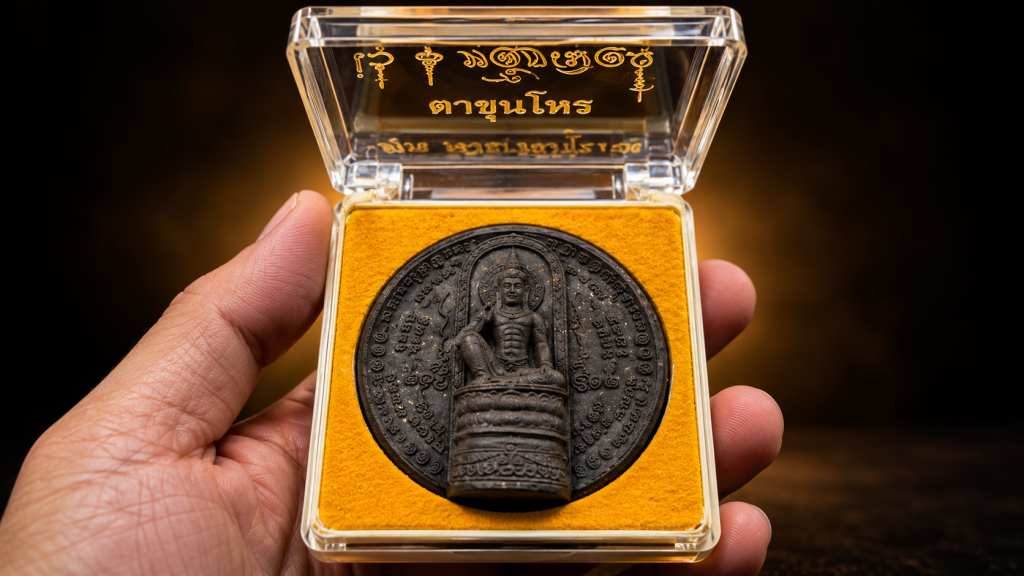
Ta Khun Hora Ku Wikrit, 2007
From a Crisis-Averting Yantra to a Legendary Chatukarm Ramathep Amulet
During the height of the Jatukam Ramathep phenomenon in Thailand, countless sacred objects were created and circulated throughout the country. Yet among the many releases, a small number stood apart because their stories were not rooted merely in popularity or commercial demand. Instead, they were tied to earlier traditions associated with the Nakhon Si Thammarat City Pillar Shrine, sacred ritual lineages, and a legendary cloth talisman known as the “Crisis-Averting Yantra.”
One of the most notable amulets in this group is:
“Ta Khun Hora Ku Wikrit, B.E. 2550 (2007)”
The amulet was featured in several Thai amulet magazines, where its origin, sacred materials, and reported experiences of worshippers were discussed. Among believers, it became associated with overcoming financial hardship, business difficulties, life crises, unexpected danger, and periods of severe uncertainty.
For devotees, these accounts are regarded as personal spiritual experiences. For collectors, however, the amulet is equally significant because it revives important visual symbols, sacred materials, and narratives from the early era of the Nakhon Si Thammarat City Pillar tradition.
Who Is “Ta Khun Hora”?
Those who are new to the Jatukam Ramathep tradition may be familiar with the name Jatukam Ramathep but know little about Ta Khun Hora.
According to accounts preserved among individuals and committees associated with the construction of the Nakhon Si Thammarat City Pillar Shrine, Ta Khun Hora is described as a highly accomplished divine astrologer and ritual master, possessing deep knowledge of prophecy, auspicious timing, ceremonial procedure, and esoteric calculation.
Within the belief system of this tradition, he is also identified with Ramathep, described as being closely connected with Jatukam Ramathep and, in some accounts, as his twin younger brother.
Traditional narratives further describe Ta Khun Hora as the teacher of Phaya Ching Chai and Phaya Sukhum, and as one of the most important masters associated with the City Pillar tradition. He is said to have served as a royal preceptor and trusted adviser in matters of ritual, planning, timing, and major decisions.
For this reason, the symbolism of Ta Khun Hora extends far beyond wealth or luck.
He represents wisdom, foresight, calculation, correct timing, strategic judgment, and the ability to find a path through difficult circumstances.
Ta Khun Hora and the Founding of the City Pillar Shrine
From the late 1980s onward, during the period surrounding the establishment of the Nakhon Si Thammarat City Pillar Shrine, stories of Ta Khun Hora appeared repeatedly in accounts of important ritual events.
According to the oral traditions of those involved, he was believed to have played a spiritual role in major ceremonies, including the selection and cutting of sacred golden takhian wood, the design of the city pillar, the determination of auspicious moments, and rituals connected with the spiritual destiny of the city.
Among followers of the City Pillar lineage, Ta Khun Hora came to be revered as a powerful divine figure with extraordinary insight, one who could perceive unfolding events and offer guidance to those facing hardship.
The phrase “Ku Wikrit,” or “Avert the Crisis,” used in the name of the 2007 amulet therefore did not emerge without precedent. Its roots were believed to go back almost two decades earlier.
The Legend of the “Crisis-Averting Yantra”
The most important story behind the amulet is connected with a sacred cloth talisman said to have been created around B.E. 2532 (1989), while work on the City Pillar Shrine was still underway.
According to accounts handed down within the lineage, economic conditions during that period became difficult for a number of followers. Trade weakened, business activity declined, and some disciples involved in shrimp farming reportedly suffered devastating financial losses.
The story relates that, after hearing of these hardships, a special sacred cloth was produced.
This became known as the “Crisis-Averting Yantra.”
The cloth was filled with sacred scripts, numbers, and yantric symbols. It was reportedly distributed only among close disciples, with instructions that those facing hardship, financial difficulty, business problems, or severe personal crisis should carry it with them as a sacred aid and source of spiritual protection.
Over time, the original cloth talismans became extremely difficult to find because so few had been made and most remained in the hands of early disciples.
Its design would later become one of the most important visual references for the 2007 Ta Khun Hora Ku Wikrit amulet.
The Return of Ta Khun Hora After More Than Two Decades
Another major reason the 2007 edition attracted attention was its revival of an early image of Ta Khun Hora.
According to collector accounts, the original image of Ta Khun Hora had appeared in amulet form around B.E. 2529 (1986). When the Ku Wikrit edition was created in 2007, the design therefore represented a return to one of the earliest known visual forms associated with him after roughly two decades.
This revival contributed significantly to the growing recognition of Ta Khun Hora among collectors and devotees of the Jatukam Ramathep tradition.
Two Principal Designs
The Ta Khun Hora Ku Wikrit edition was produced in two principal forms.
1. Ta Khun Hora on the Front, Crisis-Averting Yantra on the Reverse
The obverse features an image of Ta Khun Hora, modeled after the early form associated with the 1986 issue. Its style preserves the solemn and mystical visual character often associated with the earliest sacred objects of the City Pillar tradition.
The reverse reproduces the design of the Crisis-Averting Yantra, surrounded by eight Rahu figures and filled with sacred characters and numerical inscriptions.
This direct connection to the old ritual cloth is one of the most distinctive features of the edition.
2. Double-Sided Crisis-Averting Yantra
A second version features the yantra design on both sides.
This type was produced in a significantly smaller quantity and has therefore attracted particular interest among collectors.
Old Sacred Materials as the Heart of the Creation
Beyond the design itself, much of the reputation of this edition rests on its reported sacred materials.
According to the production records and accounts associated with the edition, older sacred objects and consecrated powders were used as important components in the mixture.
Most notably, both the large and small forms of the Suriyan-Chandra sacred powder amulets from B.E. 2530 (1987) were reportedly ground and added as foundational sacred material.
This was intended to establish a direct physical connection between the 2007 edition and the earliest generations of Jatukam Ramathep sacred objects.
It is also stated that the mixture contained more than 1,500 varieties of sacred herbal powders and auspicious substances, collected over a period exceeding fifteen years.
The production concept emphasized the use of old consecrated materials rather than newly prepared substances. Only necessary binding agents such as banana, honey, and tung oil were reportedly added to hold the material together.
These sacred powders were also said to have passed through more than twenty important consecration ceremonies before being incorporated into the final amulets.
For collectors, this aspect is especially significant because it relates directly to provenance, production tradition, and the symbolic continuity of the lineage.
Production Numbers
The commonly cited production figures are:
- Approximately 8,000 pieces of the Ta Khun Hora front / Crisis-Averting Yantra reverse type
- Approximately 800 pieces of the double-sided Crisis-Averting Yantra type
Each amulet was reportedly marked with a production code.
Various examples were also embedded with sacred takrut tubes made from gold, silver, or tin.
The number of takrut varied from piece to piece. Some contained one, others two, and some more than two. No complete surviving record appears to specify exactly which material or quantity was assigned to each variation.
As a result, individual pieces may display notable differences.
Created for Distribution Rather Than Purely for Sale
Another frequently emphasized aspect of the Ta Khun Hora Ku Wikrit edition is the intention behind its creation.
Accounts state that many of the amulets were produced for presentation as commemorative objects, gifts to supporters, distribution among devotees, and charitable purposes rather than simply for commercial sale.
Even after the main event associated with the creation had passed, some pieces were reportedly given to people facing financial hardship and donated to charitable causes.
This intention is closely connected with the meaning of the name “Ku Wikrit” — “to avert or overcome crisis.”
The idea was not only about miraculous intervention.
It also reflected a spirit of helping those who were experiencing serious difficulty and offering them both hope and encouragement.
When “Ku Wikrit” Became More Than a Name
After the amulets were distributed, stories began to circulate among worshippers.
Some described improvements in business, financial recovery, new opportunities, protection from danger, or unexpected good fortune.
These accounts helped the name “Ta Khun Hora Ku Wikrit” spread rapidly within the Thai amulet community.
However, such claims belong to the realm of faith and personal testimony rather than verifiable historical fact.
Even so, they remain an important part of the cultural history of the amulet because they shaped how it came to be understood, remembered, and valued.
An Amulet That Connects Three Eras
From a historical and collecting perspective, the 2007 Ta Khun Hora Ku Wikrit edition is especially interesting because it connects three distinct periods.
The first is the early Ta Khun Hora image from around B.E. 2529 (1986).
The second is the Suriyan-Chandra sacred powder tradition of B.E. 2530 (1987), which was reportedly used as foundational material.
The third is the Crisis-Averting Yantra tradition from around B.E. 2532 (1989).
These three historical threads were brought together again in a single sacred object created in B.E. 2550 (2007).
For that reason, Ta Khun Hora Ku Wikrit should not be viewed merely as another amulet released during the height of Jatukam Ramathep popularity.
It represents an attempt to preserve and revive imagery, sacred materials, symbolism, and narratives associated with the earliest years of the lineage.
“Averting Crisis” as a Spiritual Idea
For believers, the Ta Khun Hora Ku Wikrit may be regarded as a sacred object for protection, opportunity, and recovery during difficult periods.
For collectors, its significance may lie instead in its history, design, materials, production numbers, and relationship to the earliest traditions of the Nakhon Si Thammarat City Pillar.
Yet the phrase “Ku Wikrit” — “Avert the Crisis” carries a deeper meaning.
Every crisis in life requires more than luck.
It demands clarity, intelligence, timing, judgment, discipline, and the courage to choose a way forward.
And these qualities closely reflect the traditional image of Ta Khun Hora himself — the divine astrologer, master of timing, reader of change, and adviser in moments when the path ahead is uncertain.
More than twenty years after the earliest Ta Khun Hora images, and nearly two decades after the creation of the Ku Wikrit edition itself, this amulet continues to be remembered.
Not only because of stories of wealth, luck, or miraculous recovery,
but because within one small sacred object are woven the history of the Nakhon Si Thammarat City Pillar, an old crisis-averting yantra, the first-generation Suriyan-Chandra powders, early consecrated materials, and the faith of people searching for a way through difficult times.
That is why Ta Khun Hora Ku Wikrit, B.E. 2550 (2007) remains one of the more intriguing and meaningful sacred objects within the wider Jatukam Ramathep tradition.