
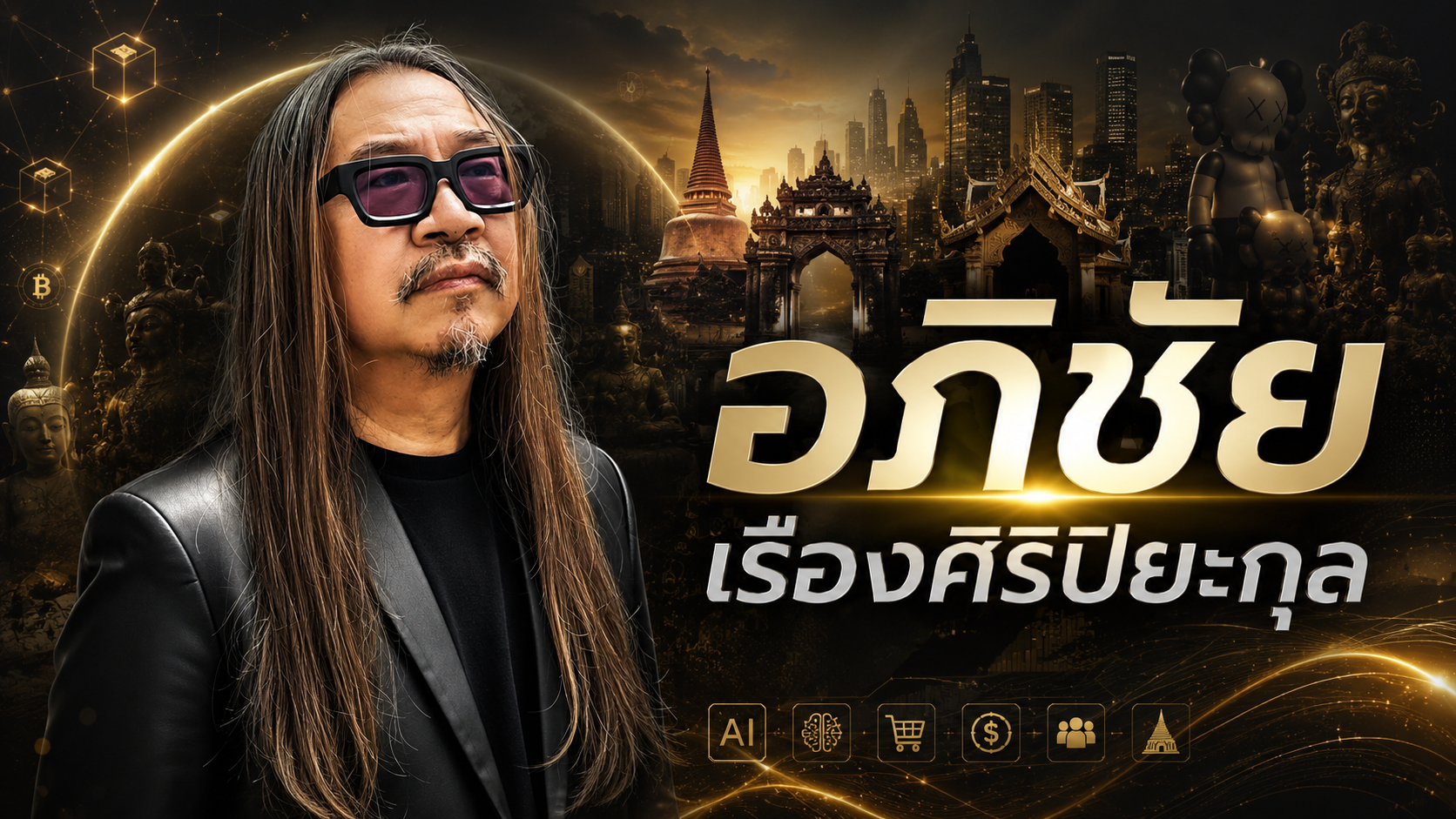
อภิชัย เรืองศิริปิยะกุล
จากคนทำเทคโนโลยี สู่ผู้สร้างโลกที่ศิลปะ ศรัทธา และนวัตกรรมมาบรรจบกัน
บางครั้งชีวิตของคนคนหนึ่งไม่ได้ถูกกำหนดด้วย “อาชีพ” เพียงอาชีพเดียว แต่ถูกสร้างขึ้นจากความสนใจหลายเรื่องที่ดูเหมือนจะไม่มีความเกี่ยวข้องกันเลย ก่อนที่วันหนึ่ง เรื่องเหล่านั้นจะค่อย ๆ เชื่อมต่อเข้าหากัน และกลายเป็นเส้นทางที่มีเอกลักษณ์เฉพาะตัว เรื่องราวของ อภิชัย เรืองศิริปิยะกุล เป็นหนึ่งในนั้น จากโลกของเทคโนโลยีและการประกอบธุรกิจ เขาค่อย ๆ เดินเข้าสู่โลกของศิลปะ วัฒนธรรม ความเชื่อ พุทธศิลป์ งานสะสม และเทคโนโลยีสมัยใหม่ จนสิ่งที่ครั้งหนึ่งเคยเป็นความสนใจคนละด้าน เริ่มกลายเป็นภาพเดียวกัน ภาพของอนาคตที่เขาเชื่อว่า “ศิลปะ ศรัทธา และเทคโนโลยี ไม่จำเป็นต้องอยู่คนละโลก”
จุดเริ่มต้นของคนที่เชื่อในเทคโนโลยี
อภิชัยเริ่มต้นเส้นทางการเป็นผู้ประกอบการในช่วงต้นทศวรรษ 2000 ปี 2001 เป็นช่วงเวลาที่โลกแตกต่างจากปัจจุบันอย่างมาก อินเทอร์เน็ตยังไม่ได้กลายเป็นโครงสร้างพื้นฐานของชีวิตอย่างทุกวันนี้ สมาร์ตโฟนยังไม่เกิดขึ้น Social Media ยังไม่ได้ครอบครองพฤติกรรมของผู้บริโภค และคำว่า Artificial Intelligence ยังเป็นเรื่องไกลตัวสำหรับคนทั่วไป การสร้างธุรกิจในยุคนั้นจึงต้องอาศัยคน เงินทุน ทีมงาน และทรัพยากรจำนวนมาก สำหรับอภิชัย ช่วงเวลานี้กลายเป็นโรงเรียนธุรกิจที่สำคัญ เขาไม่ได้เรียนรู้เฉพาะเรื่องเทคโนโลยี แต่เรียนรู้ว่าการสร้างธุรกิจคือกระบวนการทดลอง การตัดสินใจ การแก้ปัญหา และการปรับตัวอย่างต่อเนื่อง ประสบการณ์เหล่านี้สะสมยาวนานกว่าสองทศวรรษ และเมื่อโลกเดินเข้าสู่ยุค AI เขากลับพบสิ่งที่น่าสนใจว่า หลายสิ่งที่ครั้งหนึ่งต้องใช้คนจำนวนมากในการทำ วันนี้คนเพียงคนเดียวสามารถใช้เทคโนโลยีเป็นแรงทวีคูณในการสร้างงานได้ แนวคิดดังกล่าวต่อมากลายเป็นหนึ่งในแรงผลักดันของแนวคิด “Onepreneur” — ผู้ประกอบการยุคใหม่ที่สามารถสร้างและบริหารธุรกิจด้วยตัวเอง โดยมี AI และเทคโนโลยีเป็นเสมือนทีมงานที่มองไม่เห็น
เมื่อเทคโนโลยีเดินมาพบกับ “ศรัทธา”
หากมองเพียงผิวเผิน โลกของเทคโนโลยีกับโลกของความเชื่ออาจดูเหมือนอยู่กันคนละขั้ว โลกหนึ่งพูดถึงข้อมูล ระบบ Blockchain และ Artificial Intelligence อีกโลกหนึ่งพูดถึงศิลปะ วัฒนธรรม จิตวิญญาณ ประวัติศาสตร์ และศรัทธาที่ส่งต่อกันมาหลายชั่วอายุคน แต่อภิชัยกลับมองเห็นสิ่งที่อยู่ตรงกลาง เขาไม่ได้ตั้งคำถามว่า “เทคโนโลยีจะเข้ามาแทนที่ความเชื่อได้อย่างไร?” แต่ตั้งคำถามอีกแบบหนึ่งว่า “เราจะใช้เทคโนโลยีรักษาคุณค่าและเรื่องราวของความเชื่อเอาไว้ได้อย่างไร?” คำถามนี้กลายเป็นแกนสำคัญของงานหลายโครงการในเวลาต่อมา โดยเฉพาะความสนใจเกี่ยวกับการนำ Blockchain มาใช้ในการจัดเก็บข้อมูลและสร้างที่มาที่ไปของวัตถุทางวัฒนธรรม งานพุทธศิลป์ และพระเครื่อง จากสิ่งของที่เคยมีเพียงเรื่องเล่าประกอบ การมี Digital Certificate และข้อมูลที่สามารถตรวจสอบย้อนหลังได้ อาจทำให้ประวัติของงานแต่ละชิ้นถูกส่งต่อไปยังคนรุ่นต่อไปอย่างเป็นระบบมากขึ้น นี่คือจุดที่ “อดีต” เริ่มจับมือกับ “อนาคต”
BUY.th : ตลาดที่ไม่ได้ต้องการขายทุกอย่าง
แนวคิดดังกล่าวเริ่มปรากฏเป็นรูปธรรมผ่าน BUY.th แทนที่จะพัฒนา BUY.th ให้กลายเป็น Marketplace ขนาดใหญ่ที่พยายามขายสินค้าทุกประเภท อภิชัยเลือกเดินในทิศทางที่แคบกว่า แต่มีตัวตนชัดเจนกว่า นั่นคือการมุ่งสู่ตลาดเฉพาะทางด้าน Art — Art Toy — Buddhist Art — Spiritual & Cultural Collectibles หัวใจสำคัญไม่ได้อยู่เพียงการซื้อและขาย แต่อยู่ที่คำว่า “Authenticity” ผลงานควรสามารถเชื่อมโยงกลับไปยังศิลปินหรือผู้สร้างได้ มีข้อมูลของผลงาน มีเรื่องราว และมีใบรับรองดิจิทัลที่ช่วยรักษาที่มาของชิ้นงาน
ดังนั้น สิ่งที่ BUY.th พยายามสร้างจึงไม่ใช่เพียง E-commerce แต่คือ โครงสร้างความน่าเชื่อถือของงานสร้างสรรค์ เมื่อผลงานศิลปะหนึ่งชิ้นถูกสร้างขึ้น เรื่องราวของมันไม่ควรหายไปหลังจากเปลี่ยนเจ้าของ ข้อมูลของผู้สร้าง ประวัติผลงาน Certificate และ Provenance สามารถเดินทางไปพร้อมกับผลงานได้ Blockchain จึงไม่ได้ถูกนำมาใช้เพียงเพราะเป็นเทคโนโลยีใหม่ แต่มันถูกวางไว้เพื่อแก้ปัญหาเก่าแก่ที่สุดเรื่องหนึ่งของวงการของสะสม “เราจะรู้ได้อย่างไรว่าสิ่งนี้มาจากไหน และใครเป็นผู้สร้าง?”
AZURA : เมื่อศรัทธากลายเป็น Creative Ecosystem
อีกหนึ่งโครงการสำคัญของอภิชัยคือ “AZURA” AZURA ถูกพัฒนาขึ้นบนแนวคิดที่พยายามเชื่อมโลกสามใบเข้าด้วยกัน ART + BELIEF + TECHNOLOGY ภายใต้แนวคิดนี้ ความเชื่อไม่จำเป็นต้องถูกนำเสนอด้วยภาษาแบบเดิมเสมอไป พุทธศิลป์สามารถอยู่ร่วมกับ Contemporary Art เทพและสัญลักษณ์ทางความเชื่อสามารถถูกตีความใหม่ผ่าน Art Toy เครื่องรางสามารถได้รับการออกแบบด้วย Design Language ร่วมสมัย Gallery สามารถเป็นพื้นที่ของ Spiritual Experience และเทคโนโลยีสามารถทำหน้าที่บันทึกเรื่องราวและยืนยันความเป็นต้นฉบับของงานเหล่านั้น การจดทะเบียนเครื่องหมายการค้า AZURA จึงเป็นมากกว่าการได้สิทธิในชื่อทางการค้า สำหรับผู้ก่อตั้ง มันคือการวางหลักหมุดของแนวคิดระยะยาวที่จะเชื่อมมรดกทางวัฒนธรรมเข้ากับคนรุ่นใหม่
KAEN : กลับมามองรากของตัวเอง
เมื่อทำงานกับเรื่องอนาคตมากขึ้น สิ่งที่อภิชัยกลับให้ความสนใจมากขึ้นเช่นกันกลับเป็นเรื่องของ “ราก” โดยเฉพาะขอนแก่นและวัฒนธรรมอีสาน คำว่า KAEN จึงถูกนำมาพัฒนาเป็นแบรนด์และต่อยอดสู่ KAEN CORPORATION LTD. แนวคิดของ KAEN ไม่ได้หยุดอยู่ที่ผลิตภัณฑ์ใดผลิตภัณฑ์หนึ่ง แต่ตั้งคำถามใหญ่กว่านั้นว่า “ทุนทางวัฒนธรรมของท้องถิ่น จะถูกออกแบบใหม่ให้กลายเป็นสินทรัพย์ของคนรุ่นต่อไปได้อย่างไร?” ตั้งแต่งานคราฟต์ ของที่ระลึก งานศิลปะ Art Toy เครื่องประดับ พื้นที่จัดแสดง ไปจนถึงประสบการณ์สำหรับนักท่องเที่ยว สิ่งเหล่านี้สามารถใช้ Design Language เดียวกันเพื่อสร้างตัวตนของแบรนด์ได้ ขอนแก่นจึงไม่ได้ถูกมองเพียงในฐานะบ้านหรือสถานที่ แต่เป็น Cultural Capital ที่ยังมีเรื่องราวอีกจำนวนมากรอการตีความใหม่
จากผู้ประกอบการ สู่ผู้บันทึกเรื่องราว
อีกด้านหนึ่งที่เริ่มเด่นชัดขึ้นในเส้นทางของอภิชัย คือการเป็นผู้เล่าเรื่อง เรื่องราวของพระธาตุขามแก่น ประตูเมืองขอนแก่น การค้นพบไดโนเสาร์ในประเทศไทย ศิลปะ พุทธศิลป์ โบราณวัตถุ สถานที่ศักดิ์สิทธิ์ ตลอดจนประวัติศาสตร์และความทรงจำของท้องถิ่น เรื่องเหล่านี้ค่อย ๆ กลายมาเป็นเนื้อหาที่เขาต้องการบันทึกและถ่ายทอดผ่านบทความ หนังสือ และสื่อวิดีโอ เพราะเมื่อเวลาผ่านไป เขาเริ่มมองเห็นว่า สิ่งที่มีค่าบางอย่างไม่ได้สูญหายเพราะถูกทำลาย แต่มันสูญหายเพราะไม่มีใครเล่าเรื่องของมันต่อ
Onepreneur : หนังสือที่ย้อนกลับมามองชีวิตตัวเอง
หลังจากเดินทางในโลกธุรกิจมากกว่าสองทศวรรษ อภิชัยเริ่มย้อนกลับมามองเส้นทางของตัวเองอีกครั้ง จากผู้ประกอบการในปี 2001 มาถึงผู้ประกอบการในยุค Artificial Intelligence โลกสองยุคนี้แตกต่างกันอย่างมหาศาล สิ่งที่เมื่อก่อนต้องมีพนักงานหลายคน วันนี้ AI สามารถช่วยทำได้ สิ่งที่เมื่อก่อนต้องใช้เงินลงทุนจำนวนมาก วันนี้สามารถสร้าง Prototype ได้ภายในเวลาไม่นาน สิ่งที่เมื่อก่อนต้องมีองค์กรขนาดใหญ่ วันนี้คนเพียงคนเดียวอาจสร้างธุรกิจที่เข้าถึงผู้คนนับล้านได้m ประสบการณ์นี้กลายเป็นที่มาของหนังสือ “ONEPRENEUR” หนังสือที่ไม่ได้พยายามบอกว่าทุกคนควรทำงานคนเดียว แต่กำลังตั้งคำถามว่า “ในวันที่คนหนึ่งคนมีพลังของเทคโนโลยีเทียบเท่ากับองค์กรขนาดเล็ก เราควรนิยามคำว่าผู้ประกอบการใหม่หรือไม่?”
Ecosystem ที่ค่อย ๆ ปรากฏขึ้น
เมื่อมองย้อนกลับไป สิ่งที่อภิชัยสร้างอาจดูเหมือนเป็นโครงการหลายโครงการที่แยกออกจากกัน
BUY.th, BuyPay, AZURA, KAEN, ARZIO, Eventar.co, งานด้าน Blockchain, งานศิลปะ, งานพุทธศิลป์, งานวิจัย, หนังสือ, และการสร้าง Content แต่เมื่อถอยออกมาให้ไกลพอ จะเริ่มเห็นเส้นบาง ๆ ที่เชื่อมทุกสิ่งเข้าหากัน มันคือความพยายามสร้างระบบที่เชื่อม
Creator → Identity → Artwork → Certificate → Commerce → Payment → Community → Experience
ศิลปินสร้างผลงาน ผลงานมีตัวตน ตัวตนมีข้อมูล ข้อมูลมีหลักฐาน หลักฐานสร้างความน่าเชื่อถือ ความน่าเชื่อถือสร้างมูลค่า และมูลค่านั้นสามารถหมุนเวียนกลับไปหล่อเลี้ยง Creator เพื่อสร้างผลงานชิ้นต่อไป นี่คือภาพของ BUY Ecosystem ที่ค่อย ๆ ถูกประกอบขึ้นทีละส่วน
ชายที่ยังถือว่าตัวเองเป็น “คนกำลังสร้าง”
เรื่องราวของอภิชัย เรืองศิริปิยะกุล จึงยังไม่ใช่ชีวประวัติของคนที่เดินมาถึงบทสรุป ตรงกันข้าม มันเป็นเรื่องของคนที่ยังอยู่ระหว่างการทดลอง บางโครงการอาจประสบความสำเร็จ บางโครงการอาจต้องเปลี่ยนทิศทาง บางแนวคิดอาจถูกยกเลิก และบางสิ่งที่กำลังสร้างอยู่ในวันนี้ อาจกลายเป็นสิ่งสำคัญที่สุดในอีกสิบปีข้างหน้า นั่นเป็นธรรมชาติของผู้ประกอบการ เพราะการสร้างอนาคตไม่ได้เกิดจากการทำนายได้ถูกต้องทุกครั้ง แต่มาจากความสามารถในการ สร้าง ทดลอง เรียนรู้ และสร้างใหม่อีกครั้ง
จากชายที่เริ่มทำธุรกิจในยุคที่ AI ยังเป็นเรื่องไกลตัว วันนี้เขากำลังทำงานอยู่ในโลกที่คนหนึ่งคนสามารถใช้ AI เป็นนักเขียน นักออกแบบ นักวิเคราะห์ นักวิจัย และผู้ช่วยทางธุรกิจได้พร้อมกัน แต่ยิ่งเทคโนโลยีก้าวหน้า คำถามของเขากลับย้อนกลับไปหาสิ่งที่เก่าแก่กว่าเทคโนโลยีมาก เราจะรักษาเรื่องราวของเราเอาไว้ได้อย่างไร?
- เรื่องราวของศิลปิน
- เรื่องราวของงานศิลปะ
- เรื่องราวของท้องถิ่น
- เรื่องราวของความเชื่อ
- และเรื่องราวของผู้คน
บางที นี่อาจเป็นแก่นที่เชื่อมทุกสิ่งที่ อภิชัย เรืองศิริปิยะกุล กำลังสร้างเข้าด้วยกัน ไม่ใช่เพียงการสร้างบริษัทm ไม่ใช่เพียงการสร้างแพลตฟอร์ม และไม่ใช่เพียงการนำเทคโนโลยีใหม่มาใช้งาน แต่คือความพยายามที่จะนำสิ่งที่มีคุณค่าจากอดีต มาสร้างภาษาใหม่ให้กับมันในโลกอนาคต เพราะเทคโนโลยีอาจเปลี่ยนทุกสิบปี แพลตฟอร์มอาจเกิดขึ้นและหายไป ธุรกิจอาจรุ่งเรืองหรือถูกแทนที่ แต่สิ่งหนึ่งที่มนุษย์ยังคงส่งต่อจากรุ่นหนึ่งไปสู่อีกรุ่นหนึ่งเสมอ คือ “เรื่องราว” และบางที… งานที่สำคัญที่สุดของคนคนหนึ่ง อาจไม่ใช่การสร้างสิ่งที่ยิ่งใหญ่ที่สุด แต่คือการสร้างบางสิ่งที่มีความหมายมากพอ ให้คนรุ่นต่อไปอยากเล่าเรื่องของมันต่อ
Apichai Ruangsiripiyakul
From Technology Entrepreneur to a Builder at the Intersection of Art, Faith, and Innovation
Sometimes, a person’s life cannot be defined by a single profession. It is shaped instead by many interests—ideas that may initially appear unrelated, even contradictory—until one day they begin to connect and reveal a larger purpose. The story of Apichai Ruangsiripiyakul is one such journey. From technology and entrepreneurship, he gradually ventured into art, culture, spirituality, Buddhist art, collectibles, and emerging technologies. Over time, these seemingly separate worlds began to converge into a single vision: Art, faith, and technology do not have to exist in separate worlds.
The Beginning of an Entrepreneurial Journey
Apichai began his entrepreneurial journey in the early 2000s. In 2001, the world looked very different from the one we know today. The internet had not yet become the infrastructure of everyday life. Smartphones did not exist. Social media had not transformed consumer behavior. Artificial Intelligence was still largely confined to laboratories, universities, and science fiction in the public imagination. Building a business in that era required people, capital, infrastructure, and considerable resources. For Apichai, those years became a business school of their own. He learned not only about technology, but also about the realities of entrepreneurship: experimentation, decision-making, problem-solving, failure, adaptation, and persistence. Those experiences accumulated over more than two decades. Then came the age of Artificial Intelligence. Suddenly, many things that once required an entire team could be accomplished by a single individual working alongside intelligent technologies. That transformation eventually inspired one of his central ideas: “ONEPRENEUR” A new generation of entrepreneur who can build, operate, and scale a business with AI and technology functioning almost like an invisible team.
When Technology Meets Faith
At first glance, technology and spirituality appear to belong to opposite worlds. One speaks the language of data, software, Blockchain, and Artificial Intelligence. The other speaks of culture, history, sacred objects, symbolism, belief, and faith passed from generation to generation. Apichai, however, became interested in what might exist between these two worlds. Instead of asking: “How can technology replace traditional belief?” He began asking a very different question: “How can technology preserve the value, authenticity, and stories behind belief?” That question would become an important foundation for several projects that followed. One area of particular interest was the application of Blockchain technology to the documentation and preservation of information surrounding Buddhist amulets, sacred art, cultural objects, and collectible works. Traditionally, the history of such objects has often depended heavily on physical certificates, expert knowledge, personal trust, and stories passed from one owner to another. But what if an object could carry a persistent digital history? What if information about its creator, origin, certificate, ownership, and provenance could be preserved alongside the object itself? This is where the past begins to meet the future.
BUY.th: A Marketplace That Does Not Want to Sell Everything
This philosophy began taking practical form through BUY.th. Rather than attempting to become another mass-market e-commerce platform selling everything to everyone, BUY.th was envisioned around a narrower but more distinctive territory: Art — Art Toys — Buddhist Art — Spiritual & Cultural Collectibles
At the heart of the concept is not merely commerce. It is authenticity. A work should be connected to its creator. Its story should be documented. Its identity should be preserved. And where appropriate, a digital certificate can help establish and maintain its provenance. In this sense, BUY.th is intended to become more than an online marketplace. It represents an attempt to build a trust infrastructure for creative works. When an artwork changes hands, its story should not disappear. Information about the artist, the work, its certificate, and its provenance should be able to travel with it. Blockchain, therefore, is not introduced merely because it is a modern technology. It is intended to address one of the oldest questions in the world of art and collectibles: “Where did this object come from—and who created it?”
AZURA: Transforming Faith into a Creative Ecosystem
Another important part of Apichai’s journey is AZURA. AZURA developed around an idea that brings together three worlds: ART + BELIEF + TECHNOLOGY Under this philosophy, spirituality does not have to be communicated only through traditional forms. Buddhist art can coexist with contemporary art. Sacred symbolism can be reinterpreted through Art Toys. Amulets and spiritual objects can be redesigned through a contemporary design language. A gallery can become a spiritual experience. And technology can help preserve the stories and authenticity behind those creations. The development of AZURA therefore represents more than the creation of another brand. It reflects a broader ambition: to create a contemporary language for faith without erasing its cultural roots. It is an attempt to connect cultural heritage with a new generation—through design, art, storytelling, experience, and technology.
KAEN: Returning to the Roots
Interestingly, the further Apichai explored the future, the more attention he began giving to the past—and particularly to the cultural identity of Khon Kaen and Northeastern Thailand. This thinking became part of the foundation for KAEN and later KAEN CORPORATION LTD. KAEN was not conceived simply around one product category. Instead, it began with a larger question: “How can local cultural capital be redesigned into meaningful assets for the next generation?” Craft products., Souvenirs., Art., Art Toys., Jewelry., Exhibition spaces., Tourism experiences., Local stories. All of these can potentially be connected through a coherent design language and transformed into a contemporary cultural brand. Khon Kaen, therefore, becomes more than a geographical location. It becomes Cultural Capital. A source of stories, symbols, craftsmanship, history, identity, and inspiration waiting to be reinterpreted for a new era.
From Entrepreneur to Storyteller
Another dimension of Apichai’s work gradually began to emerge: storytelling. The stories of Phra That Kham Kaen. The Khon Kaen City Gate. The discovery of dinosaurs in Thailand. Buddhist art. Ancient objects. Sacred places. Local traditions. Spiritual beliefs. And the cultural history of Northeastern Thailand. These subjects increasingly became material he wanted to research, document, and communicate through articles, books, digital media, and video. Because over time, another realization became clear: Some valuable things do not disappear because they are destroyed. They disappear because nobody continues telling their stories. Technology can preserve information. But storytelling preserves meaning. And meaning is what allows culture to survive across generations.
ONEPRENEUR: Looking Back at More Than Two Decades of Entrepreneurship
After more than two decades in business, Apichai began looking back at his own entrepreneurial journey. From the entrepreneur of 2001 to the entrepreneur of the Artificial Intelligence era. The difference between these two worlds is enormous. Tasks that once required several employees can now be supported by AI. Ideas that once required significant capital to prototype can now be tested rapidly. A small organization can access technologies once available only to large corporations. And one individual can potentially coordinate capabilities that previously required an entire department. This transformation became the foundation of ONEPRENEUR.
The idea is not that everyone should work alone. The deeper question is: “When one person can command the technological capabilities of a small organization, should we redefine what it means to be an entrepreneur?” ONEPRENEUR therefore represents more than a business concept. It is also a reflection on Apichai’s own journey—from building businesses before the AI revolution to exploring what entrepreneurship may become after it.
An Ecosystem Begins to Emerge
Viewed individually, Apichai’s projects may initially appear disconnected: BUY.th., BuyPay., AZURA., KAEN., ARZIO., Eventar.co., Blockchain., Art., Buddhist art., Research., Books., Content creation., Technology., But step back far enough, and a connecting structure begins to appear. It is an attempt to connect: Creator → Identity → Artwork → Certificate → Commerce → Payment → Community → Experience
A creator produces a work. The work has an identity. That identity carries information. Information creates traceability. Traceability builds trust. Trust supports value. And value can return to the creator, enabling the next work to be created. This is the larger idea behind the evolving BUY Ecosystem. Not merely another marketplace. Not merely another payment application. Not merely another technology platform. But an interconnected environment in which creators, collectors, consumers, cultural objects, digital identity, commerce, and technology can reinforce one another.
A Man Who Still Considers Himself a Builder
The story of Apichai Ruangsiripiyakul is therefore not the biography of someone who has reached the final chapter. Quite the opposite. It is the story of someone
- still experimenting.
- Still building.
- Still questioning.
- Some projects may succeed.
- Some may need to change direction.
- Some ideas may eventually be abandoned.
- And something being built today may unexpectedly become the most important work of the next decade.
That uncertainty is not separate from entrepreneurship. It is entrepreneurship. Building the future does not require predicting everything correctly. It requires the ability to: Build. Experiment. Learn. Adapt. And build again. Apichai began his entrepreneurial journey in a world where Artificial Intelligence still seemed distant from everyday business. Today, he operates in a world where a single individual can work alongside AI as writer, designer, analyst, researcher, strategist, and creative partner. Yet the more advanced technology becomes, the more fundamental his questions appear to become. How do we preserve the stories that matter?
- The stories of artists.
- The stories behind artworks.
- The stories of local communities.
- The stories of sacred objects.
- The stories of culture and belief.
- And ultimately, the stories of people.
Perhaps this is the thread connecting everything Apichai Ruangsiripiyakul is attempting to build. It is not simply about creating companies. It is not simply about launching platforms. And it is not about adopting technology merely because it is new. It is about taking something meaningful from the past and giving it a new language for the future. Because technology may change every decade. Platforms may rise and disappear. Business models may flourish and become obsolete. But there is one thing humanity has continued to pass from one generation to another since the beginning of civilization: Stories.
And perhaps the most meaningful work a person can leave behind is not necessarily the largest company, the most advanced technology, or the greatest commercial success. Perhaps it is to create something meaningful enough that the next generation believes its story is worth telling.