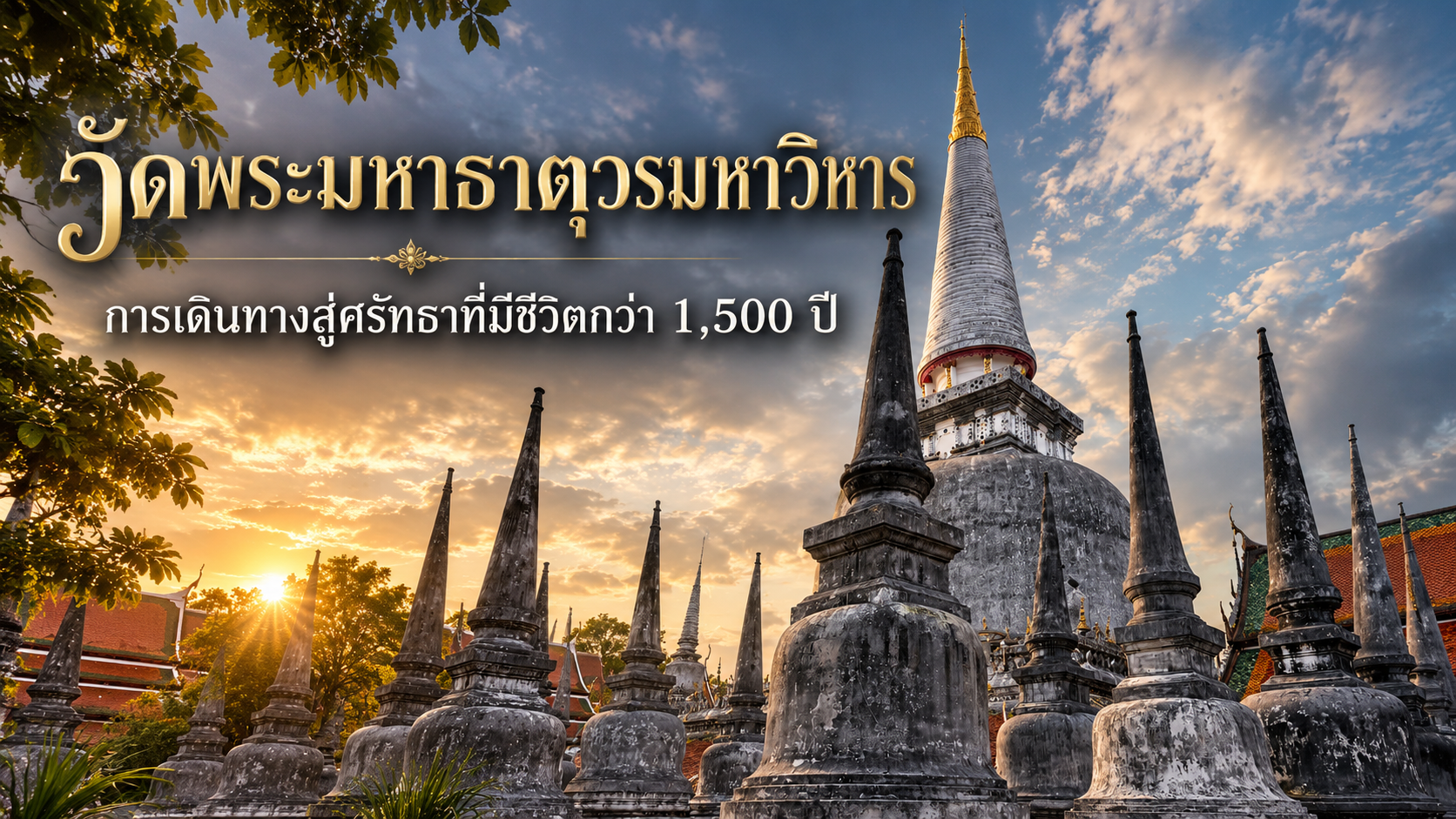
วัดพระมหาธาตุวรมหาวิหาร
การเดินทางสู่ศรัทธาที่มีชีวิตกว่า 1,500 ปี
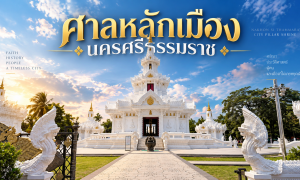
บางการเดินทางพาเราไปพบสถานที่ใหม่ แต่บางการเดินทางกลับพาเราไปพบสิ่งที่อยู่ลึกลงไปภายในตัวเราเอง กลางเมืองนครศรีธรรมราช เมืองเก่าแก่แห่งคาบสมุทรไทย มีพระบรมธาตุเจดีย์สีขาวตั้งตระหง่านเหนือแนวหลังคาเมือง ไม่ว่าจะผ่านไปกี่ร้อยปี ผู้คนยังคงเดินทางมายังสถานที่แห่งนี้
บางคนมาเพื่อกราบพระบรมสารีริกธาตุ
บางคนมาเพื่อขอพร
บางคนมาแก้บน
บางคนเดินทางมาเพราะเรื่องราวที่ได้รับการถ่ายทอดจากพ่อแม่และปู่ย่าตายาย
และบางคนอาจไม่ได้มาเพื่อขอสิ่งใดเลย เพียงอยากมายืนอยู่ต่อหน้าสถานที่ซึ่งศรัทธาของผู้คนดำเนินต่อเนื่องมายาวนานกว่าหนึ่งพันปี สถานที่แห่งนั้นคือ วัดพระมหาธาตุวรมหาวิหาร จังหวัดนครศรีธรรมราช และในปี 2026 สถานที่ศักดิ์สิทธิ์แห่งนี้ได้รับการจารึกลงในบัญชี มรดกโลกของ UNESCO อย่างเป็นทางการ นี่จึงไม่ใช่เพียงเรื่องน่ายินดีของชาวนครศรีธรรมราช แต่เป็นช่วงเวลาสำคัญที่เรื่องราวจากเมืองทางใต้ของประเทศไทย ได้กลายเป็นมรดกที่ได้รับการยอมรับว่ามีคุณค่าในระดับสากล
เมืองที่เติบโตขึ้นรอบศรัทธา
นครศรีธรรมราชไม่ใช่เมืองที่เพิ่งเกิดขึ้นในประวัติศาสตร์สมัยใหม่ ตำแหน่งของเมืองบนคาบสมุทรทำให้พื้นที่แห่งนี้เชื่อมโยงกับโลกภายนอกผ่านเครือข่ายการเดินเรือและการค้า ซึ่งนำผู้คน สินค้า ความคิด ศิลปะ และความเชื่อจากหลายอารยธรรมเข้ามาพบกัน UNESCO ระบุว่า วัดพระมหาธาตุวรมหาวิหารมีจุดเริ่มต้นมาตั้งแต่ราวคริสต์ศตวรรษที่ 8 และพัฒนาขึ้นท่ามกลางอิทธิพลทางศาสนาและสถาปัตยกรรมจากหลายพื้นที่ ทั้งพราหมณ์-ฮินดู พุทธมหายานและเถรวาท รวมถึงอิทธิพลจากอินเดีย ชวา ศรีลังกา และวัฒนธรรมมอญในบริเวณเมียนมาตอนใต้ สิ่งเหล่านี้ไม่ได้เข้ามาแล้วสูญหายไป แต่ค่อย ๆ หลอมรวมกับความเชื่อและวัฒนธรรมท้องถิ่น จนเกิดเป็นเอกลักษณ์ของนครศรีธรรมราชที่เรายังมองเห็นและสัมผัสได้จนถึงปัจจุบัน เพราะฉะนั้น เมื่อเดินเข้าไปในวัดพระมหาธาตุฯ เราจึงไม่ได้กำลังเดินเข้าไปใน “วัดเก่า” เพียงแห่งหนึ่ง เรากำลังเดินเข้าไปในพื้นที่ซึ่งบันทึกการพบกันของอารยธรรมต่าง ๆ เอาไว้เป็นเวลานับพันปี
เมื่อพระบรมธาตุปรากฏตรงหน้า
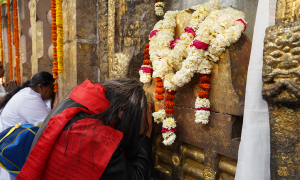
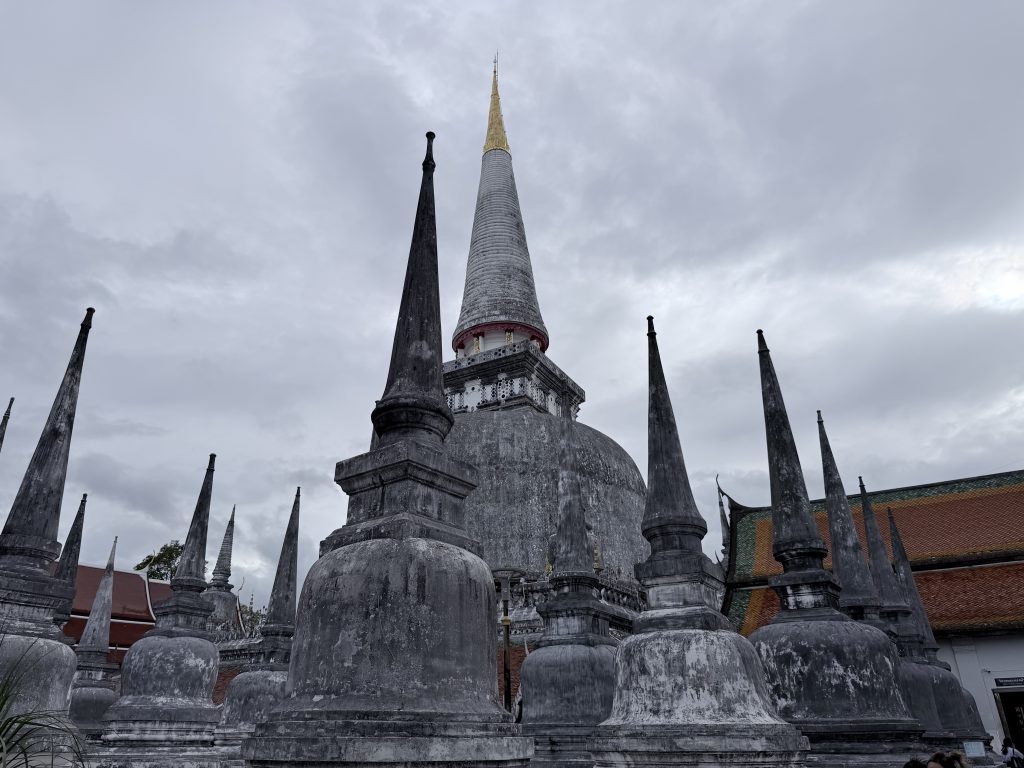
ช่วงเวลาหนึ่งที่น่าจดจำที่สุดของการเดินทาง คือวินาทีแรกที่มองเห็น พระบรมธาตุเจดีย์ องค์เจดีย์สีขาวขนาดใหญ่ตั้งสูงเหนือสิ่งก่อสร้างโดยรอบ ส่วนยอดสะท้อนแสงจากท้องฟ้าภาคใต้ ขณะที่รอบองค์พระธาตุเต็มไปด้วยรายละเอียดทางศิลปกรรมซึ่งทำให้เราต้องค่อย ๆ เดิน ค่อย ๆ มอง แต่ความงดงามของพระบรมธาตุไม่ได้อยู่ที่สถาปัตยกรรมเพียงอย่างเดียว ความหมายที่แท้จริงอยู่ที่สิ่งซึ่งมองไม่เห็น นั่นคือ ศรัทธาของผู้คน ผู้คนเดินเวียนรอบองค์พระธาตุอย่างสงบ เสียงสวดมนต์ดังแผ่วอยู่เป็นระยะ มือของใครบางคนถือดอกไม้
อีกคนพนมมือหลับตา ครอบครัวหนึ่งพาลูกหลานมากราบพระธาตุเป็นครั้งแรก ภาพเหล่านี้ทำให้เข้าใจว่า เหตุใด UNESCO จึงไม่ได้มองวัดพระมหาธาตุฯ เพียงในฐานะโบราณสถาน เพราะนี่คือ Living Heritage — มรดกที่ยังมีชีวิต ศาสนา ประเพณี วรรณกรรม ศิลปะ และความทรงจำของผู้คนยังคงดำเนินอยู่ในพื้นที่เดียวกับสถาปัตยกรรมโบราณ มากกว่า 1,500 ปีผ่านไป ผู้คนยังคงเดินทางมาที่นี่ และนั่นอาจเป็นสิ่งมหัศจรรย์ยิ่งกว่าความเก่าแก่ของอาคารเสียอีก
ผ้าผืนหนึ่งกับศรัทธาของผู้คนนับพัน
หากต้องการเข้าใจความสัมพันธ์ระหว่างวัดกับผู้คนให้ลึกขึ้น ควรรู้จักประเพณีสำคัญอย่าง การแห่ผ้าขึ้นธาตุ ผ้าพระบฏหรือผ้าที่ผู้ศรัทธานำมาถวายไม่ได้มีความหมายเพียงในฐานะวัตถุ มันคือการนำศรัทธาของมนุษย์ไปเชื่อมโยงกับพระบรมธาตุ ผู้คนจำนวนมากร่วมกันถือผืนผ้า เดินไปยังองค์พระบรมธาตุ ก่อนนำขึ้นถวายเป็นพุทธบูชา คนที่ไม่เคยรู้จักกันสามารถจับผ้าผืนเดียวกันและเดินไปในทิศทางเดียวกันได้ ภาพธรรมดานี้อธิบายคำว่า “ศรัทธาร่วมกัน” ได้ดีกว่าคำอธิบายยาวหลายหน้า UNESCO เองยกประเพณีการห่มผ้าองค์พระบรมธาตุ ตลอดจนประเพณีและศิลปะท้องถิ่นอย่างโนรา เป็นส่วนหนึ่งของความสัมพันธ์อันต่อเนื่องระหว่างสถานที่ศักดิ์สิทธิ์แห่งนี้กับชุมชน
เหตุใดโลกจึงให้ความสำคัญกับสถานที่แห่งนี้
การได้รับสถานะมรดกโลกไม่ได้หมายความเพียงว่า “วัดแห่งนี้สวย” หรือ “วัดแห่งนี้เก่า” คณะกรรมการมรดกโลกจารึกวัดพระมหาธาตุวรมหาวิหารตามเกณฑ์สำคัญสองข้อ คือ เกณฑ์ เกณฑ์แรกสะท้อนถึงการแลกเปลี่ยนคุณค่าทางวัฒนธรรมระหว่างอารยธรรมต่าง ๆ พระบรมธาตุและสถาปัตยกรรมของวัดแสดงให้เห็นร่องรอยของความคิดและศิลปกรรมจากโลกหลายส่วน ก่อนจะถูกหลอมรวมและพัฒนาจนเกิดรูปแบบเฉพาะ และต่อมายังส่งอิทธิพลต่อศาสนสถานในประเทศไทย มาเลเซีย และพื้นที่อื่น ๆ ส่วนอีกเกณฑ์หนึ่งเกี่ยวข้องกับความเชื่อ ประเพณี และวัฒนธรรมที่ยังมีชีวิต กล่าวอีกอย่างหนึ่งคือ โลกไม่ได้เห็นคุณค่าเพียงสิ่งที่คนในอดีตสร้างขึ้น แต่เห็นคุณค่าของสิ่งที่คนในปัจจุบันยังคงรักษาเอาไว้
อย่ารีบเดินออกจากวัด
เมื่อเดินทางมาถึงวัดพระมหาธาตุฯ สิ่งหนึ่งที่อยากแนะนำคือ อย่ารีบ อย่ามองสถานที่แห่งนี้เป็นเพียงจุดหมายหนึ่งในแผนการท่องเที่ยวที่ต้องถ่ายภาพให้เสร็จแล้วเดินทางต่อ ลองเก็บโทรศัพท์ลงสักครู่ เดินช้าลง มององค์พระบรมธาตุจากระยะไกล แล้วค่อย ๆ เดินเข้าไป
สังเกตรอยเก่าบนสถาปัตยกรรม
มองแสงแดดที่ตกลงบนผิวเจดีย์
มองผู้สูงอายุที่พนมมือ
มองเด็กที่เดินตามครอบครัวเข้ามาในวัด
แล้วลองคิดว่า ก่อนหน้าที่เราจะมายืนอยู่ตรงนี้ มีมนุษย์อีกกี่รุ่นแล้วที่เคยยืนอยู่ในบริเวณเดียวกัน อาณาจักรเกิดขึ้นและล่มสลาย เส้นทางการค้าเปลี่ยนไป เมืองขยายตัว เทคโนโลยีเปลี่ยนโลก แต่ผู้คนยังเดินทางมายังพระบรมธาตุ บางทีคุณค่าของสถานที่แห่งนี้อาจซ่อนอยู่ตรงนั้น
มรดกโลกไม่ใช่รางวัล แต่คือความรับผิดชอบ
การได้รับการขึ้นทะเบียนเป็นมรดกโลกในปี 2026 คือจุดเริ่มต้นมากกว่าจุดสิ้นสุด UNESCO ยังมีข้อเสนอแนะเกี่ยวกับการอนุรักษ์หลายด้าน ตั้งแต่การดูแลโครงสร้างและอาคาร การจัดทำข้อมูลดิจิทัล การศึกษาทางโบราณคดี ไปจนถึงการปกป้องมรดกทางวัฒนธรรมที่จับต้องไม่ได้ซึ่งสัมพันธ์กับวัด เพราะมรดกโลกไม่ควรหมายถึงจำนวนนักท่องเที่ยวที่เพิ่มขึ้นเท่านั้น คำถามที่สำคัญกว่าคือ เราจะส่งต่อสถานที่แห่งนี้ไปถึงคนรุ่นต่อไปในสภาพเช่นไร นักท่องเที่ยวจึงเป็นส่วนหนึ่งของการอนุรักษ์ได้เช่นกัน ด้วยการเคารพพื้นที่ศักดิ์สิทธิ์ แต่งกายและวางตัวให้เหมาะสม ไม่สัมผัสหรือสร้างความเสียหายแก่โบราณสถาน และเลือกสนับสนุนชุมชนกับผู้ประกอบการท้องถิ่นอย่างรับผิดชอบ เพราะทันทีที่สถานที่หนึ่งได้รับการประกาศว่าเป็น “มรดกของโลก” หน้าที่ในการรักษามันก็ไม่ได้เป็นของนครศรีธรรมราชเพียงฝ่ายเดียวอีกต่อไป
แล้วสักครั้ง…ลองเดินทางไปนครศรีธรรมราช
หากมีโอกาสเดินทางลงใต้ ลองให้เวลานครศรีธรรมราชมากกว่าการเป็นเมืองที่เราขับรถผ่าน
ตื่นเช้า
เดินเข้าสู่เขตเมืองเก่า
ไปถึงวัดในเวลาที่แดดยังไม่แรง
แล้วเดินเข้าไปหาพระบรมธาตุอย่างช้า ๆ คุณไม่จำเป็นต้องเป็นนักประวัติศาสตร์ ไม่จำเป็นต้องเข้าใจสถาปัตยกรรม และไม่จำเป็นต้องมีความรู้เรื่องมรดกโลก เพียงเปิดใจให้กับสถานที่ เพราะบางครั้ง การเดินทางที่มีคุณค่าที่สุดไม่ได้เกิดขึ้นเมื่อเราไปถึงสถานที่ที่อยู่ไกลที่สุด แต่เกิดขึ้นเมื่อสถานที่แห่งหนึ่งทำให้เราได้มองย้อนกลับไปไกลที่สุด
ไกลผ่านเวลา
ไกลผ่านผู้คนหลายชั่วอายุ
และไกลกลับเข้ามาถึงตัวเราเอง
วันนี้ วัดพระมหาธาตุวรมหาวิหาร จังหวัดนครศรีธรรมราช ไม่ได้เป็นเพียงศูนย์รวมศรัทธาของชาวใต้ หรือสมบัติทางวัฒนธรรมของประเทศไทยเท่านั้น แต่ได้รับการยอมรับในฐานะส่วนหนึ่งของมรดกร่วมกันของมนุษยชาติ และนั่นทำให้การเดินทางไปนครศรีธรรมราชในวันนี้มีความหมายต่างออกไป เราไม่ได้เดินทางไปเพียงเพื่อ “เห็นมรดกโลก” แต่กำลังเดินทางไปพบกับ
ศรัทธาที่ผ่านกาลเวลามากกว่า 1,500 ปี และยังคงมีชีวิตอยู่ตรงหน้าเรา วัดพระมหาธาตุวรมหาวิหาร นครศรีธรรมราช
บางสถานที่ควรไปให้เห็นสักครั้ง
แต่บางสถานที่… ควรไปสัมผัสด้วยตัวเองสักครั้งในชีวิต
Wat Phra Mahathat Woramahawihan
A Journey into 1,500 Years of Living Faith
Some journeys take us to new places. Others take us somewhere deeper — into history, memory, faith, and perhaps even into ourselves. In the heart of Nakhon Si Thammarat, one of southern Thailand’s oldest cities, a great white stupa rises above the rooftops. For centuries, people have journeyed here. Some come to pay homage to the Buddha’s sacred relics. Some come to pray. Some return to fulfill promises once made. Some are brought here by stories passed down from parents and grandparents. And some come asking for nothing at all. They simply want to stand before a sacred place where faith has endured for more than a thousand years. This is Wat Phra Mahathat Woramahawihan, Nakhon Si Thammarat. In 2026, this extraordinary sacred complex was inscribed on the UNESCO World Heritage List — bringing a story from southern Thailand onto the world stage. But this recognition is about far more than an ancient temple. It is about a living connection between people, place, history, and faith.
A City Shaped by Faith
Nakhon Si Thammarat is no ordinary provincial city. Long before the modern borders of Southeast Asia were drawn, this part of the Malay Peninsula stood along maritime networks connecting distant civilizations. Merchants, monks, travelers, ideas, beliefs, and artistic traditions moved through these routes. India., Sri Lanka., Java., The Malay world., Mainland Southeast Asia. Cultures met here, interacted, and gradually became part of something distinctly local. According to UNESCO, the origins of Wat Phra Mahathat Woramahawihan date back to around the 8th century, with its development reflecting centuries of religious and cultural exchange. Hindu traditions, Mahayana Buddhism, and Theravada Buddhism all left their traces, alongside architectural and artistic influences associated with India, Java, Sri Lanka, and Mon traditions. Yet these influences were not simply copied. They were absorbed, interpreted, transformed, and eventually became part of the cultural identity of Nakhon Si Thammarat. To walk into Wat Phra Mahathat today, therefore, is not simply to enter an old Buddhist temple. It is to enter a place where civilizations once met — and where their echoes can still be felt.
The First Sight of the Great Stupa
There is a moment during the visit that is difficult to forget. It is the first time you truly see the Phra Borommathat Chedi. The monumental white stupa rises above the surrounding structures, its soaring form drawing the eye upward toward the sky. In the southern sunlight, its surfaces shift subtly between white, silver, shadow, and gold. It is magnificent. But architecture alone does not explain the power of this place. Look around. A woman closes her eyes and raises her hands in prayer. An elderly man walks slowly around the sacred monument. A family brings its children to pay respect to the Buddha’s relics. Flowers are carried in careful hands. Quiet prayers drift through the air. Suddenly, the temple is no longer merely an ancient monument. It becomes something alive. This is perhaps the most important thing to understand about Wat Phra Mahathat Woramahawihan. Its story did not end centuries ago. It continues today. People still worship here. Families still bring younger generations here. Traditions are still practiced. Stories are still told. Faith is still carried from one generation to another. This is not simply heritage preserved behind glass. It is living heritage.
A Piece of Cloth, Thousands of Believers
To understand how deeply this temple is connected to its people, one should look at one of Nakhon Si Thammarat’s most powerful traditions — the ceremonial offering of cloth to the Great Stupa. During the tradition known as Hae Pha Khuen That, devotees carry a long sacred cloth toward the Phra Borommathat Chedi as an offering of devotion. At first glance, it may appear to be simply a procession. But watch more closely. Hundreds, sometimes thousands, of hands hold the same cloth. Many of these people have never met. They may come from different towns, different families, different generations. Yet for that moment, they walk together.
One piece of cloth connects them.
One sacred monument draws them forward.
One shared act of faith gives the crowd a common purpose.
Perhaps few images explain the meaning of living heritage more beautifully than this. The monument survives not simply because stone and brick have endured. It survives because people continue to give it meaning.
Why the World Recognized This Place
World Heritage status does not simply mean that a place is beautiful. Nor does it merely mean that it is old. Wat Phra Mahathat Woramahawihan was inscribed under UNESCO World Heritage criteria (ii) and (vi). Criterion (ii) recognizes the extraordinary cultural exchanges represented by the site. Over centuries, architectural ideas, religious traditions, artistic influences, and cultural practices from different parts of Asia encountered one another here. They were transformed into distinctive local expressions and, in turn, influenced religious architecture and traditions elsewhere in the region. Criterion (vi), meanwhile, recognizes the temple’s profound association with living beliefs, traditions, rituals, and cultural practices. This distinction is important. The world is not recognizing only what people built in the past. It is also recognizing what people continue to believe, practice, protect, and pass forward today.
Do Not Rush Through This Temple
There is one simple piece of advice for anyone visiting Wat Phra Mahathat Woramahawihan. Do not rush. Do not treat it merely as another attraction to photograph before moving on to the next destination. Put your phone away for a few minutes. Walk slowly. Begin by looking at the Great Stupa from a distance. Then approach it gradually. Notice the old surfaces. Observe the architecture. Watch how sunlight moves across the white stupa. Listen to the sounds around you. Watch an elderly worshipper standing quietly in prayer. Watch a child following their family into the temple. And then consider this: How many generations stood here before us? Kingdoms have risen and disappeared. Trade routes have changed. Cities have expanded. Technologies have transformed human life beyond recognition. Yet people still come here.
They still bring flowers.
They still bow.
They still walk around the sacred monument.
They still tell its stories to their children.
Perhaps that continuity is one of the greatest treasures preserved at Wat Phra Mahathat.
World Heritage Is Not a Trophy
The inscription of Wat Phra Mahathat Woramahawihan on the UNESCO World Heritage List in 2026 is a moment of celebration. But World Heritage status should never be understood simply as an award. It is a responsibility. UNESCO’s recommendations include continued conservation, archaeological research, documentation, structural protection, and safeguarding the intangible cultural traditions associated with the temple. This matters because greater international recognition will inevitably bring greater attention. And potentially, more visitors. The challenge is therefore not simply to ask: “How many tourists can World Heritage status bring?” A more important question is: “What will we pass on to the next generation?” Visitors have a role in answering that question. Respect the sacred nature of the site. Dress appropriately. Avoid touching or damaging historic structures. Observe local customs. Support local communities and responsible businesses. And above all, remember that this is not a theme park built for tourists. It remains a sacred place. The moment a site becomes part of the heritage of humanity, protecting it becomes a responsibility shared far beyond the community that has cared for it for centuries.
Come to Nakhon Si Thammarat
If your journey ever takes you south through Thailand, do not allow Nakhon Si Thammarat to become simply another city you pass through. Give it time. Wake early. Walk through the old city while the morning air is still cool. Arrive at Wat Phra Mahathat before the day becomes busy. And then walk slowly toward the Great Stupa.
You do not need to be a historian.
You do not need to understand Buddhist architecture.
You do not need to know the terminology of World Heritage conservation.
You simply need to allow the place to speak.
Stand there for a moment.
Look upward.
Listen.
And remember that countless people stood on this ground long before us.
Some came with hope.
Some came with gratitude.
Some came carrying prayers.
Some came carrying the memories of their ancestors.
And centuries from now, if this heritage is protected wisely, others may stand in the same place.
A Journey Worth Making
Today, Wat Phra Mahathat Woramahawihan is more than one of southern Thailand’s most sacred Buddhist sites. It is more than an architectural landmark. And it is more than a destination newly inscribed on the UNESCO World Heritage List. It represents something increasingly rare in our rapidly changing world: continuity. A connection between past and present. Between architecture and belief. Between a city and its people. Between one generation and the next. Perhaps that is why a journey to Nakhon Si Thammarat can become something more than sightseeing. We do not travel there simply to see a World Heritage Site. We travel there to encounter a faith that has crossed centuries — and is still alive before us.
Wat Phra Mahathat Woramahawihan Nakhon Si Thammarat, Thailand
Some places deserve to be seen once. But some places deserve to be experienced at least once in a lifetime.

Recommended for you