ศาลเจ้านัมบะ ยาซากะ (Namba Yasaka Shrine)
เมื่อเสียงคำรามของสิงโต กลายเป็นพลังแห่งศรัทธา
วันที่ 11 พฤศจิกายน 2568
บางครั้ง…การเดินทางที่น่าจดจำที่สุด ไม่ใช่การไปยังสถานที่ที่ยิ่งใหญ่ที่สุด แต่คือสถานที่ที่ทำให้เราหยุดยืนเงียบ ๆ แล้วรู้สึกว่า “พลังบางอย่าง” กำลังโอบล้อมเราอยู่ ในเช้าวันที่ 11 พฤศจิกายน 2568 ระหว่างการเดินทางในเมืองโอซาก้า ประเทศญี่ปุ่น ผมมีโอกาสได้มาเยือน “ศาลเจ้านัมบะ ยาซากะ (Namba Yasaka Shrine)” ศาลเจ้าชินโตที่ซ่อนตัวอยู่ไม่ไกลจากย่านนัมบะอันคึกคัก แม้จะตั้งอยู่ใจกลางเมือง แต่เมื่อก้าวผ่านประตูโทริอิ ความวุ่นวายของมหานครกลับค่อย ๆ จางหาย เหลือเพียงเสียงลม เสียงนกร้อง และบรรยากาศแห่งความสงบที่ทำให้รู้สึกเหมือนได้เดินเข้าสู่อีกโลกหนึ่ง แต่สิ่งที่ทำให้ผู้คนจากทั่วโลกเดินทางมาที่นี่ ไม่ใช่เพราะความเก่าแก่ของศาลเจ้า หากเป็นสิ่งก่อสร้างที่ยิ่งใหญ่ราวกับหลุดออกมาจากตำนาน…
สิงโตยักษ์…ผู้กลืนกินสิ่งชั่วร้าย
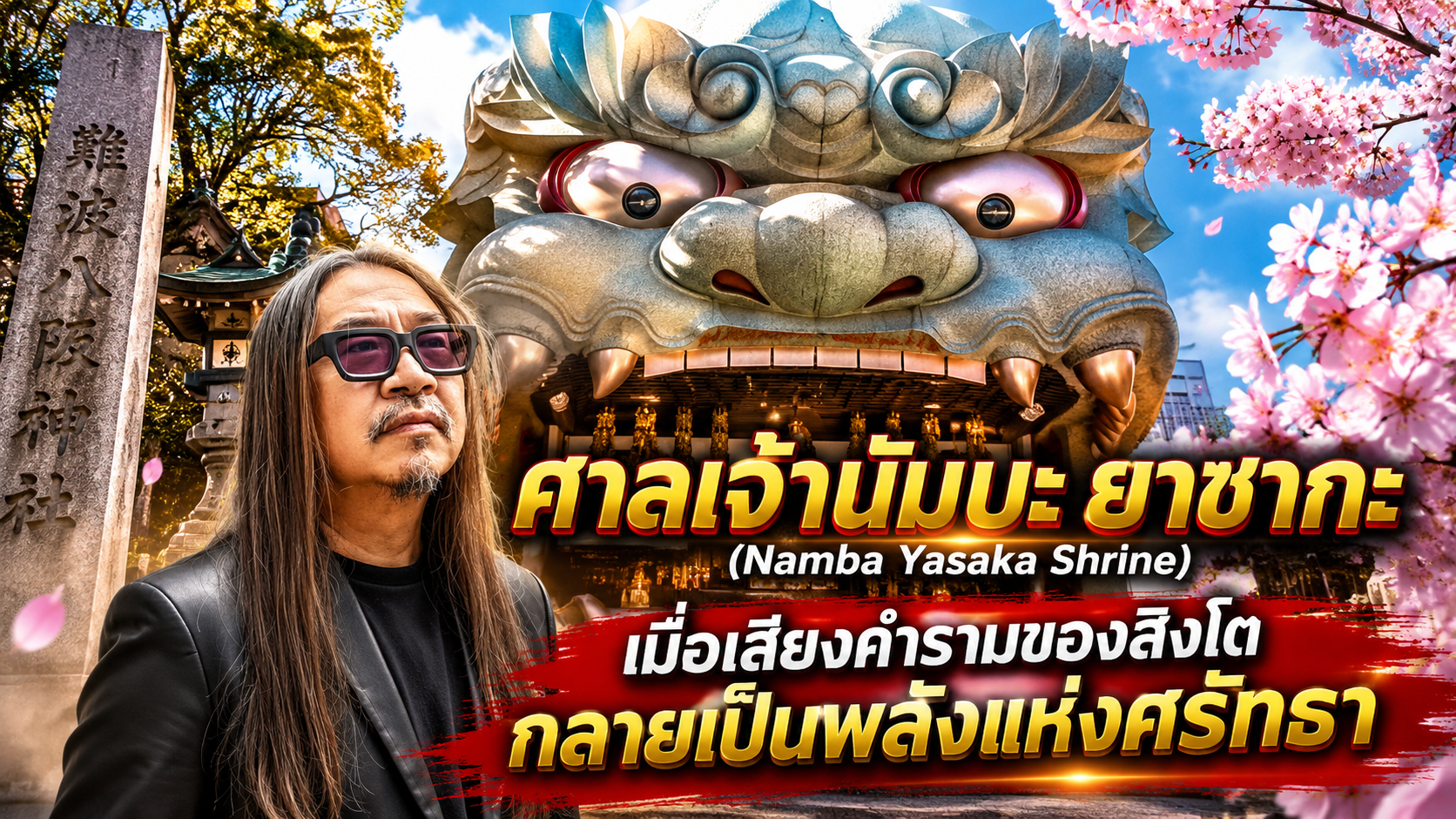
สิ่งแรกที่ปรากฏต่อสายตาคือ “เวทีรูปหัวสิงโตขนาดมหึมา” สูงกว่า 12 เมตร กว้างประมาณ 11 เมตร ปากของสิงโตอ้ากว้างราวกับกำลังเปล่งเสียงคำราม ดวงตากลมโต จมูกสีทอง และเขี้ยวขนาดใหญ่ ทำให้รู้สึกทั้งเกรงขามและน่าหลงใหลในเวลาเดียวกัน ยิ่งยืนอยู่ด้านหน้า ยิ่งสัมผัสได้ถึงพลังของงานศิลปะที่ไม่ได้สร้างขึ้นเพื่อความสวยงามเพียงอย่างเดียว แต่เต็มไปด้วยความหมายเชิงสัญลักษณ์ ตามความเชื่อของญี่ปุ่น “ปากของสิงโตสามารถกลืนกินภูตผี สิ่งอัปมงคล และเคราะห์ร้าย พร้อมทั้งนำโชคลาภและความสำเร็จเข้ามาแทนที่” นี่จึงเป็นเหตุผลที่นักเรียน นักศึกษา คนทำงาน นักธุรกิจ รวมถึงผู้ที่กำลังเริ่มต้นสิ่งใหม่ ๆ นิยมเดินทางมาขอพรที่ศาลเจ้าแห่งนี้ เชื่อกันว่า “เสียงคำราม” ของสิงโตจะขับไล่สิ่งไม่ดี และเปิดทางให้โอกาสใหม่ ๆ เข้ามาในชีวิต
ศิลปะที่เล่าเรื่องผ่านสถาปัตยกรรม
ยิ่งเดินชมรายละเอียด ยิ่งพบว่าศิลปะของศาลเจ้าแห่งนี้ไม่ได้เน้นความหรูหรา หากแต่ให้ความสำคัญกับ “ความหมาย” โครงสร้างไม้แบบญี่ปุ่นดั้งเดิมเรียบง่าย สะอาด และสง่างาม สีแดงของอาคารตัดกับสีเขียวของต้นไม้ หลังคาที่โค้งอย่างงดงาม เชือกศักดิ์สิทธิ์ “ชิเมนาวะ” ที่แขวนอยู่เหนือศาล โคมหินที่ตั้งเรียงราย ทุกองค์ประกอบสะท้อนปรัชญาแบบญี่ปุ่นที่เชื่อว่า “ธรรมชาติ มนุษย์ และเทพเจ้า สามารถอยู่ร่วมกันได้อย่างกลมกลืน” ส่วนหัวสิงโตยักษ์เองก็เป็นตัวอย่างของการนำศิลปะพื้นบ้านมาผสมผสานกับสถาปัตยกรรมร่วมสมัยได้อย่างน่าทึ่ง มันไม่ใช่เพียงประติมากรรม แต่เป็น “เวทีประกอบพิธีกรรม” เป็นสัญลักษณ์ของพลัง และเป็นภาพจำที่ไม่มีศาลเจ้าแห่งใดเหมือน
ประวัติศาสตร์ที่ผ่านทั้งสงครามและการฟื้นฟู
ศาลเจ้านัมบะ ยาซากะ มีประวัติยาวนานหลายศตวรรษ โดยเชื่อกันว่าก่อตั้งมาตั้งแต่สมัยโบราณ และเคยเป็นศูนย์รวมจิตใจของชาวเมืองนัมบะ ในช่วงสงครามโลกครั้งที่สอง ศาลเจ้าได้รับความเสียหายจากการโจมตีทางอากาศ แต่หลังสงคราม ชาวเมืองได้ร่วมแรงร่วมใจกันบูรณะขึ้นใหม่ หัวสิงโตยักษ์ที่เห็นในปัจจุบันสร้างขึ้นในช่วงคริสต์ทศวรรษ 1970 และกลายเป็นสัญลักษณ์อันโดดเด่นของศาลเจ้าจนถึงทุกวันนี้ เรื่องราวของศาลเจ้าแห่งนี้จึงไม่ใช่เพียงประวัติศาสตร์ของอาคาร แต่คือประวัติศาสตร์ของ “หัวใจผู้คน” ที่ร่วมกันรักษาศรัทธาให้คงอยู่แม้เวลาจะเปลี่ยนไป
ความเชื่อที่ยังคงมีชีวิต
สิ่งที่ผมชื่นชอบที่สุดคือ ผู้คนที่เดินทางมาที่นี่ไม่ได้มาเพียงเพื่อถ่ายรูป หลายคนยืนหลับตา ค่อย ๆ โค้งคำนับ โยนเหรียญลงในกล่องรับบริจาค ตบมือสองครั้ง กล่าวคำอธิษฐาน แล้วโค้งคำนับอีกครั้งตามธรรมเนียมของศาลเจ้าชินโต พิธีกรรมสั้น ๆ เหล่านี้แสดงให้เห็นว่า ความศรัทธาไม่จำเป็นต้องยิ่งใหญ่ บางครั้ง…เพียงช่วงเวลาสงบไม่กี่นาที ก็เพียงพอที่จะทำให้จิตใจกลับมาเข้มแข็งอีกครั้ง
ความประทับใจที่ติดตัวกลับบ้าน
สำหรับผม ศาลเจ้านัมบะ ยาซากะ ไม่ใช่เพียงจุดเช็กอินชื่อดังของโอซาก้า แต่เป็นสถานที่ที่ทำให้เห็นว่า “ศิลปะสามารถสร้างความศรัทธาได้” “สถาปัตยกรรมสามารถเล่าเรื่องประวัติศาสตร์ได้” และ “ความเชื่อสามารถมอบกำลังใจให้ผู้คนได้ แม้จะผ่านกาลเวลามาหลายร้อยปี” เมื่อเดินออกจากศาลเจ้า ผมหันกลับไปมองหัวสิงโตยักษ์อีกครั้ง ครั้งนี้มันไม่ได้ดูน่าเกรงขามเหมือนตอนแรก กลับให้ความรู้สึกราวกับกำลังเฝ้ามองผู้มาเยือนทุกคน พร้อมส่งคำอวยพรเงียบ ๆ ว่า “ขอให้ทุกความกังวลถูกกลืนหายไป และขอให้การเดินทางครั้งต่อไปของคุณเต็มไปด้วยโชค ความหวัง และโอกาสใหม่ ๆ”
บางที… นั่นอาจเป็นเหตุผลที่ทำให้ผู้คนยังคงเดินทางมายังศาลเจ้าแห่งนี้ไม่ขาดสาย เพราะสิ่งที่พวกเขาได้รับกลับไป ไม่ใช่เพียงภาพถ่ายสวย ๆ แต่คือความรู้สึกว่า…ยังมีพลังแห่งศรัทธาคอยผลักดันให้เราเดินหน้าต่อไปเสมอ
Namba Yasaka Shrine
Where the Roar of the Lion Becomes a Symbol of Faith
November 11, 2025
Sometimes, the most unforgettable journeys are not about visiting the grandest landmarks, but about discovering places that quietly touch your heart. On November 11, 2025, during my trip to Osaka, Japan, I had the opportunity to visit Namba Yasaka Shrine, a hidden spiritual sanctuary tucked away just a short walk from the bustling streets of Namba. The contrast was striking. Moments earlier, I was surrounded by crowded shopping streets, flashing signs, and the rhythm of a modern metropolis. Yet, as soon as I stepped through the shrine’s torii gate, the atmosphere changed completely. The city’s noise faded into the background, replaced by the gentle sound of the wind and the peaceful silence that makes Japanese shrines so captivating. It felt as though I had stepped into another world.
The Giant Lion That Swallows Misfortune
The first thing that captured my attention was the shrine’s most iconic landmark—a massive lion-shaped stage, standing approximately 12 meters high and 11 meters wide. Its enormous open mouth, sharp teeth, golden eyes, and powerful expression create an unforgettable sight. At first glance, it appears fierce and intimidating. Yet the longer I stood before it, the more I realized that this remarkable sculpture represents something far deeper than artistic imagination. According to Japanese tradition, the lion’s wide-open mouth symbolizes the power to devour evil spirits, bad fortune, and negative energy, while welcoming good luck, success, and prosperity. This belief has made Namba Yasaka Shrine a popular destination for students preparing for examinations, entrepreneurs launching new ventures, professionals pursuing career advancement, and travelers seeking blessings for new beginnings. Standing before the giant lion, I couldn’t help but wonder how many hopes, dreams, and silent prayers had been entrusted to this place over the years.
A Masterpiece of Symbolic Architecture
As I wandered through the shrine grounds, I found myself appreciating the subtle elegance of Japanese architecture. Unlike many monumental structures that impress through extravagance, Namba Yasaka Shrine embodies the beauty of simplicity. The vivid vermilion shrine buildings stand gracefully against lush green trees. Traditional wooden structures blend naturally with the surrounding landscape. Stone lanterns quietly line the pathways. Sacred shimenawa ropes mark spaces believed to be inhabited by divine spirits. Every element reflects the Shinto philosophy that nature, humanity, and the divine exist in harmony. The giant lion itself is more than a sculpture. It serves as a ceremonial stage during traditional festivals while simultaneously acting as a powerful spiritual symbol. It is a rare example of how art, religion, and architecture merge into a single unforgettable masterpiece.
A History of Resilience
Namba Yasaka Shrine has a history spanning many centuries and has long served as a place of worship for the local community.
Like much of Osaka, however, it suffered severe damage during the air raids of World War II.
After the war, the shrine was carefully rebuilt through the collective efforts of local residents.
The giant lion stage that visitors admire today was constructed in the 1970s and has since become one of Osaka’s most recognizable cultural landmarks.
Its story is not merely about rebuilding a shrine.
It is a story of preserving identity, tradition, and faith despite the hardships of history.
A Living Tradition of Faith
One of the most meaningful moments during my visit was watching people quietly offer their prayers. They bowed respectfully. Dropped a coin into the offering box. Clapped their hands twice. Closed their eyes in silent prayer. Then bowed once more before leaving. There was nothing dramatic or elaborate about these rituals. Yet they revealed something profound. Faith does not always need grand ceremonies. Sometimes, a few peaceful moments of sincere reflection are enough to restore hope and inner strength.
Reflections from My Journey
For me, Namba Yasaka Shrine is far more than a famous tourist attraction in Osaka. It is a place where art inspires faith, architecture preserves history, and tradition continues to shape modern life. Before leaving, I turned back for one last look at the enormous lion. It no longer appeared intimidating. Instead, it felt almost protective—as though silently watching over every visitor and offering a simple blessing: “May your worries be swallowed away, and may your path ahead be filled with courage, opportunity, and good fortune.” Perhaps that is why people continue to return here year after year. Not only to admire its remarkable architecture. Not only to capture beautiful photographs.
But to leave with something far more valuable— A renewed sense of hope. Because sometimes, the greatest souvenir from a journey is not something you can hold in your hands. It is the quiet confidence you carry home in your heart.

Recommended for you